Japan for First-Time Visitors: What You Actually Need to Know
From IC cards and luggage forwarding to restaurant hours and unspoken rules, these are the practical details I no longer consciously notice, but wish every first-time visitor knew. This is my attempt to remember them and to answer the questions people still ask me before their first journey: What should I know about Japan?
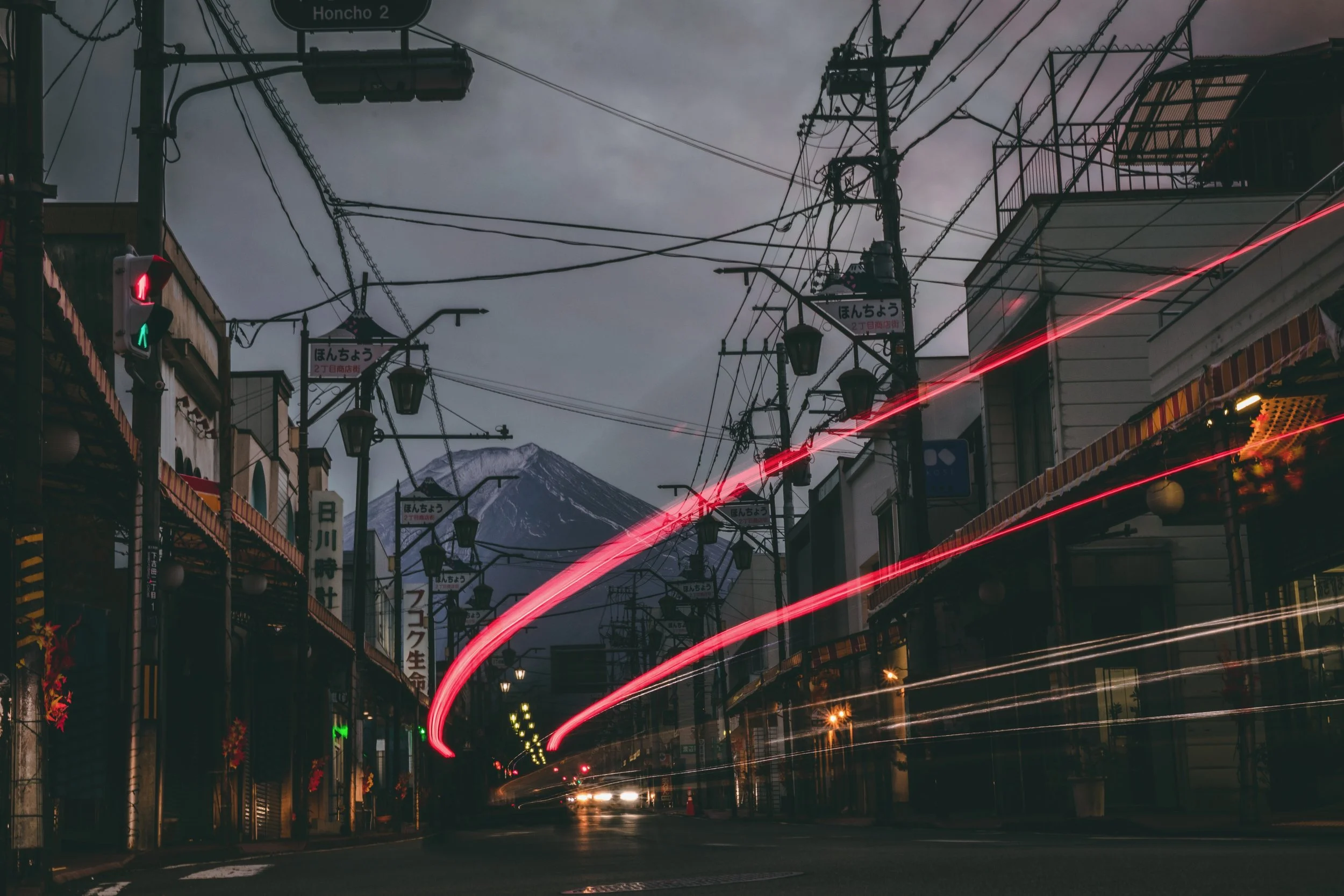
Mount Fuji seen from an ordinary street in Fujiyoshida. The mountain seems to follow you throughout the city, appearing especially imposing and beautiful in the clear, cold air of winter.
-
This is an impossible and slightly unfair question. Japan has given me too many different versions of beauty: Mount Fuji appearing between ordinary houses in Fujiyoshida, the forests of Mount Kōya, the density of Tōkyō and quiet landscapes seen from a local train in Gunma. The islands and blue waters in Okinawa or Ogasawara.
The most beautiful place may simply be the one in which you unexpectedly stop rushing and meet wonderful people.
-
Almost certainly. Some of the largest stations feel like cities with their own streets, shops, restaurants and internal geography. Missing the correct exit can place you several blocks from where you intended to be.
Getting lost does not mean that you have failed at Japan. Check the exit number, follow the signs and ask a member of staff when the signs appear to have entered another dimension.
-
Only briefly. The control panel may offer more options than you expected from a toilet, but the flush button is usually marked with a recognisable symbol or the words flush or 流す.
Not every button needs to be investigated. Some discoveries can safely wait until your second trip.
-
No. Tipping is not customary in restaurants, taxis or hotels and may cause confusion. Good service is already part of the experience.
The kindest response is usually a sincere arigatō gozaimasu — and not leaving coins behind for someone to chase after you with.
-
Sometimes, but not everywhere. Tattoo policies vary: some baths refuse all tattoos, while others accept small tattoos if they are covered or welcome tattooed guests without restrictions. Private baths are another option.
Always check before travelling to a particular onsen. This is one situation in which hoping nobody notices is not a relaxing bathing strategy.
-
Yes. Japan is generally a comfortable destination for solo female travellers, and I have often enjoyed the freedom of exploring it alone. Eating alone is common, public transport is dependable and many hotels offer single rooms designed for one guest rather than treating solo travel as unusual.
That does not mean abandoning the precautions you would take elsewhere. Stay aware of your surroundings, particularly late at night and in crowded entertainment districts, keep an eye on your drink and trust your instincts if a person or situation feels uncomfortable. Some trains provide women-only carriages during particular hours, although the rules vary by city and railway line.
-
Probably. Returning home may involve standing beneath fluorescent lights, staring at a disappointing sandwich and remembering that your FamilyMart iced coffee was once prepared with ceremony.
Familiarity can make it surprisingly difficult to remember what Japan felt like at the beginning: the uncertainty of standing in front of an unfamiliar ticket machine, the fear of breaking a rule you did not know existed, or the suspicion that everyone else understood a system that had somehow not been explained to you. This guide brings together the practical details I stopped noticing, but which can make a first journey considerably easier. It is not a list of rules for behaving correctly, nor an attempt to explain an entire country before you arrive. It is a personal view of Japan from someone who first encountered it as a foreigner, lived there long enough for parts of it to become familiar, and still continues to see it from somewhere between the inside and the outside.
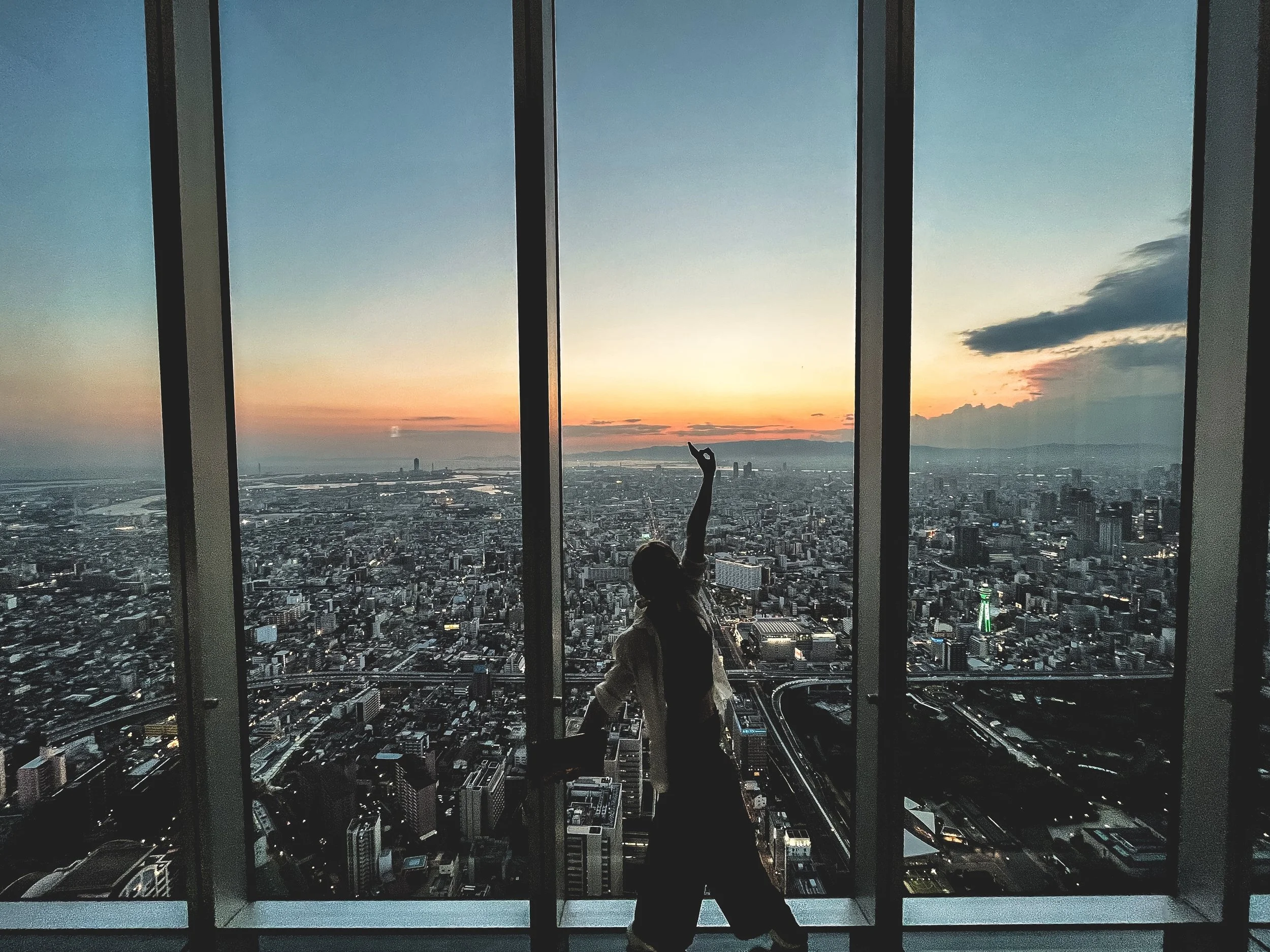
A city I called home. Looking across Ōsaka from Abeno Harukas, which was still Japan’s tallest building when this photograph was taken. A title now held by the Mori JP Tower in Tōkyō’s Azabudai Hills.
Do not try to see the whole country
The most common mistake in a first Japan itinerary is not choosing the wrong destination. It is choosing too many destinations. Tōkyō, Kyōto, Ōsaka, Nara, Hiroshima, Hakone and Kanazawa may all look temptingly close on a map. Japan’s trains make these journeys possible, but possibility does not necessarily make them enjoyable. Repeatedly packing, checking out, finding a station platform and checking in again takes more time and energy than an itinerary suggests. For a ten-day journey, two or three bases are usually enough. With two weeks, there is more room for an additional region or a slower rural stop.
Tōkyō alone is not one experience. Each of its major stations opens onto what can feel like a city of its own, with several levels, neighbourhoods, shopping streets and entirely different atmospheres within walking distance. You could spend a week exploring the areas around a single station and still leave things unseen. Asakusa, Shinjuku, Ueno and Kiyosumi-Shirakawa can feel like different cities. Another day in Tōkyō may therefore reveal more than adding another city to an already crowded itinerary.
Japan rewards repetition and attention. It does not need to be completed like a game.
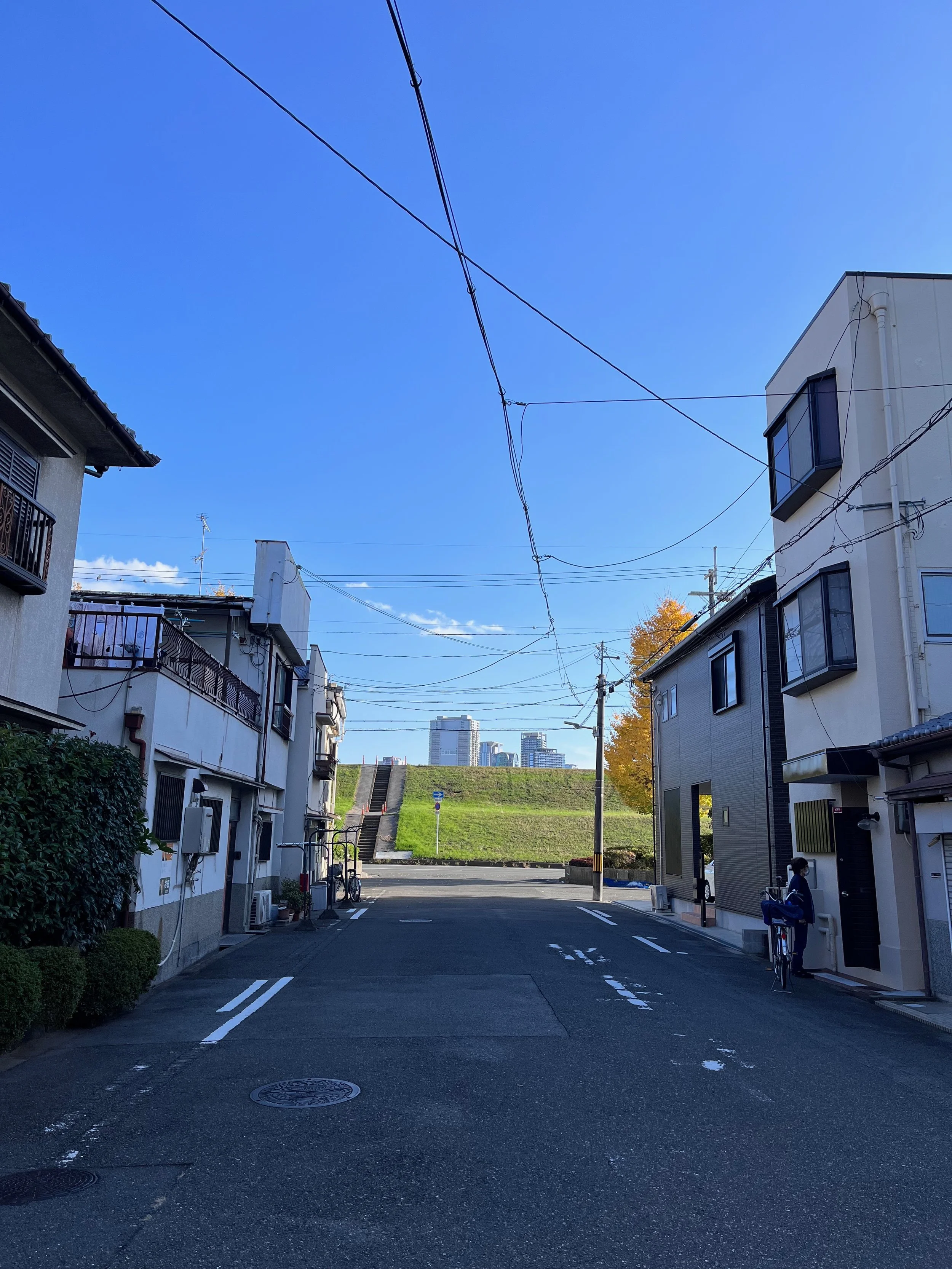
Morning stroll through the neighbourhood.
Choose where you stay carefully
A hotel described as being “in Tōkyō” may still be a long journey from the places you want to visit. Look at the nearest station and the railway lines serving it, rather than only the distance shown on a map. The busiest station is not automatically the most convenient choice. Shinjuku offers excellent connections, but its size can feel overwhelming. A smaller station with a direct line may make daily travel much easier.
Japanese hotel rooms also tend to be compact. Check the actual floor area and bed width rather than relying on photographs. A “small double” can be uncomfortable for two people, particularly with large suitcases. Check-in times may be observed more strictly than in some European hotels, although luggage can usually be left at reception before the room is ready. At a ryokan, dinner may be served at a fixed time, making punctual arrival particularly important.
An IC card makes local travel simple
An IC card is a rechargeable transport card used on most urban trains, metros and buses. The best-known versions include Suica with its black-and-white penguin*, Pasmo with its pink robot and Icoca with Ico-chan, a cheerful blue platypus. Despite the different names and mascots, the major cards are largely interoperable, so the most practical choice is usually whichever card is available where you begin your journey. Or, admittedly, whichever character you like best. A Suica purchased in Tōkyō can be used on compatible transport in Kyōto or Ōsaka. You tap it at the entrance gate and again when leaving; the correct fare is deducted automatically. Some rural lines, highway buses and long-distance trains require separate tickets.
An IC card does not make an individual journey cheaper. Its value is convenience. It removes the need to calculate a fare or buy a ticket before every local trip. It can also be used at many vending machines, convenience stores, station lockers and other businesses displaying the IC symbol.
* The Suica Penguin will “graduate” as the card’s official mascot by the end of March 2027. I will miss him: Suica was my first Japanese IC card, and the small penguin still belongs to my earliest memories of finding my way around Japan.
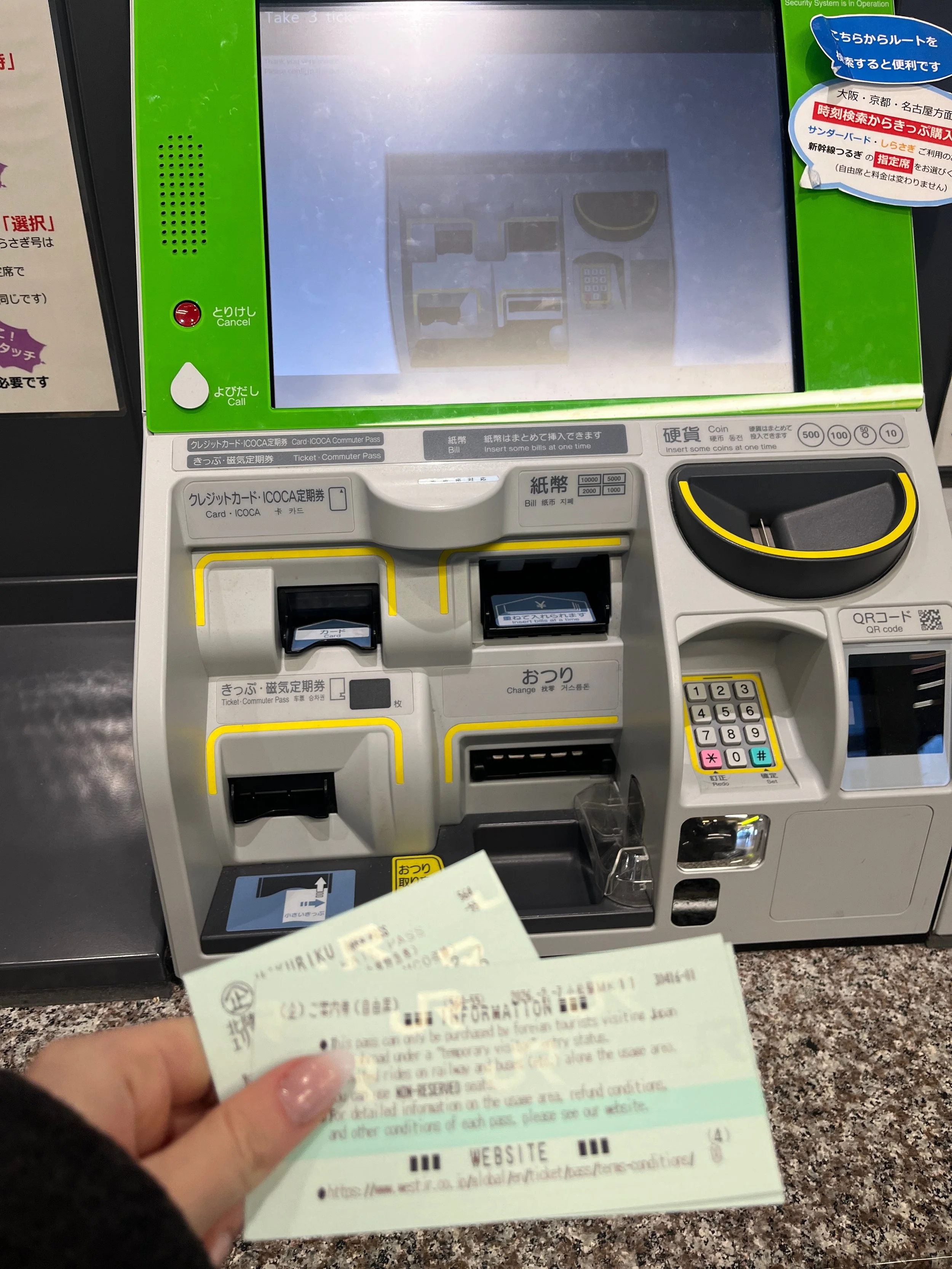
Shinkansen journeys often come with two paper tickets: a basic fare ticket for the distance travelled and a limited express ticket for the Shinkansen service and reserved seat. Stack both tickets and insert them into the gate together — never one after the other. Collect every ticket returned by the machine, as you may need them again when leaving the Shinkansen area or continuing your journey.
Physical card or mobile wallet?
For iPhone users, the easiest option may be a digital IC card. Suica, Pasmo, Icoca and Toica can be added directly through Apple Wallet on compatible devices. With Express Mode enabled, the phone can be tapped at the gate without opening an app or authenticating every journey. You can also check the balance and add money through Wallet. However, not every foreign payment card works reliably for top-ups, so it is sensible to set the card up before the first important journey.
Mobile IC support on Android depends more heavily on the device and where it was purchased. Many phones sold outside Japan do not support the necessary Japanese Osaifu-Keitai functionality. If your phone is incompatible — or you simply prefer not to depend on its battery — a physical visitor card remains an excellent alternative.
The Japan Rail Pass is not automatically good value
The nationwide Japan Rail Pass once felt like an obvious purchase for many visitors. After substantial price increases, it now makes sense only for particular routes involving considerable long-distance travel. As of 2026, an ordinary seven-day pass bought through the official website costs ¥50,000. A traveller moving between Tōkyō, Kyōto and Ōsaka may spend less by buying individual tickets. Regional rail passes can also be better suited to a limited area. Use a fare calculator and compare your actual journeys before buying a pass. Do not design a rushed itinerary merely to justify one.
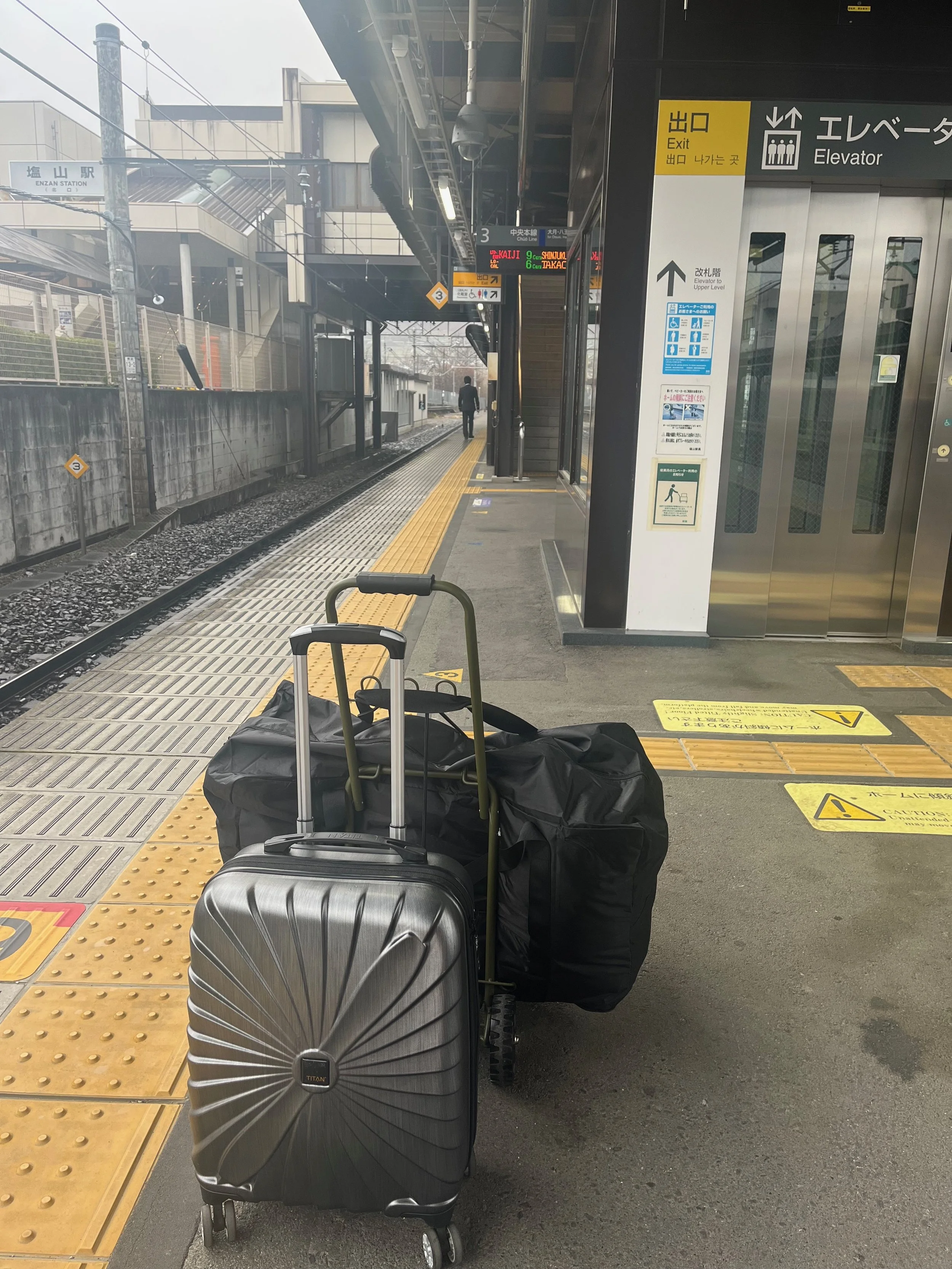
Send your luggage ahead
Japan’s luggage-forwarding service, commonly known as takkyūbin or takuhai, is one of the most useful services many first-time visitors discover too late. Hotels and convenience stores can send a suitcase to another hotel, an airport or a private address. Delivery is often next day, although remote destinations and longer distances can require additional time. Or set a date. This is especially helpful when travelling by train, staying in small rooms or spending one night in a ryokan between two longer hotel stays. Send the large suitcase to the later hotel and carry only what you need for the night in between.
Confirm that the receiving accommodation accepts forwarded luggage, allow enough delivery time and keep medication, documents and valuables with you.
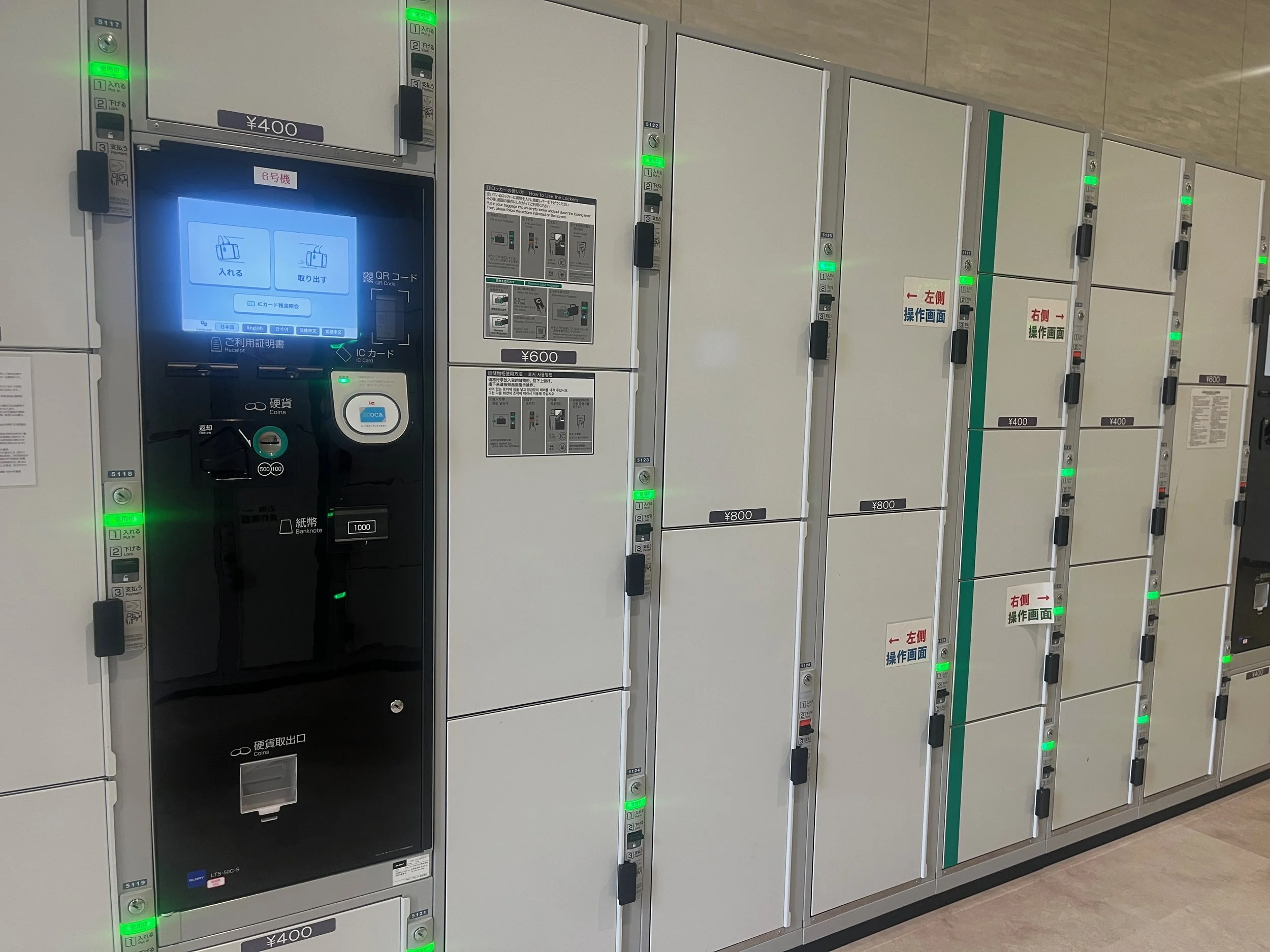
Coin lockers at Japanese stations provide convenient short-term storage for anything from a small bag to a large suitcase. Most accept cash or an IC card, which also acts as the key. Storage is generally limited to three calendar days, but rules and daily reset times vary, so always check the instructions on the individual locker.
Download a few useful apps before leaving
Japan does not require a phone full of specialised travel apps. A small, carefully chosen group is enough:
Google Maps is useful for routes, station exits and finding businesses. Pay attention to the exact train, platform, direction and exit number. In a large station, “Exit A2” is much more useful than simply knowing the station name. Download the relevant areas for offline use before you leave.
Google Translate or another translation app helps with menus, signs and short conversations. Download Japanese for offline use before departure and become familiar with the camera function.
GO can be helpful for ordering taxis, particularly when an address is difficult to explain.
SmartEX or its website can be useful for booking the Tōkaidō, Sanyō and Kyūshū Shinkansen connecting cities including Tōkyō, Kyōto, Ōsaka and Hiroshima. Availability and registration can depend on your country, device and payment card, so test it before relying on it.
ecbo cloak helps you find and reserve temporary luggage storage at participating stations, shops, cafés and other businesses. It is particularly useful when station lockers are full, your suitcase is too large for them or you have several hours between checking out and catching your next train.
Tabelog is Japan’s major restaurant-search and review platform. I find it particularly useful for discovering places that may not appear prominently on English-language travel sites or Google Maps. Its ratings should not be interpreted in quite the same way as Google reviews: scores tend to be more restrained, so a restaurant does not need a rating close to five to be very good.
For most travellers, an eSIM is easier than pocket Wi-Fi
Pocket Wi-Fi is still frequently recommended in Japan travel guides. It can be useful for families, groups or travellers connecting several devices to one plan. However, it is another object to collect, carry, charge and return. Personally, I find an eSIM more convenient. It can be installed before departure and activated when you arrive, while your normal physical SIM remains in the phone. There is no additional device and no need for everyone to remain close to the person carrying the router.
Before purchasing one, check that your phone is unlocked and supports eSIM. Compare the amount of high-speed data, the network used, the length of validity and whether the plan is data-only. Installation usually requires internet access, so set it up at home and save the activation instructions offline. Do not activate it too early if the validity period begins immediately.
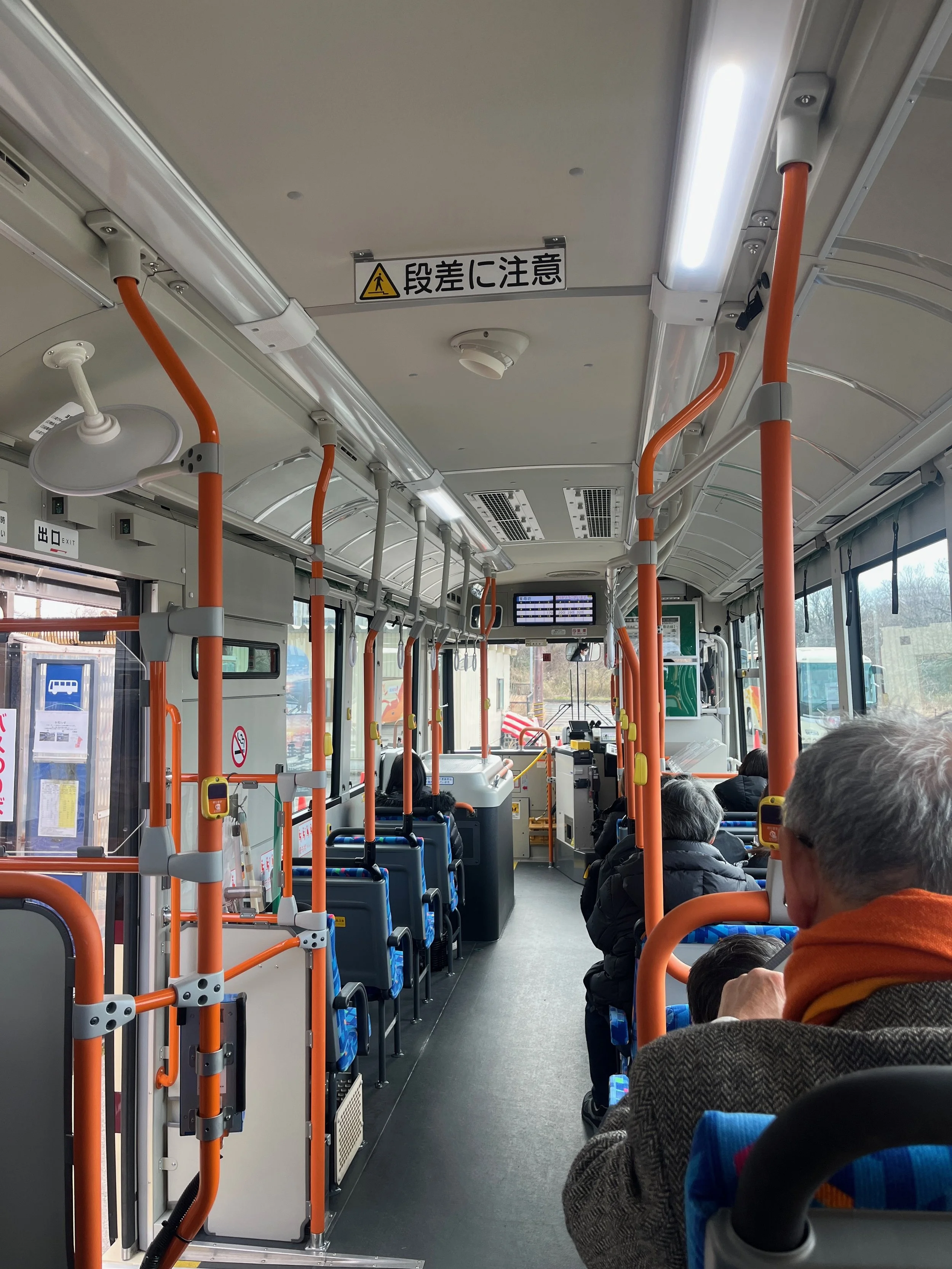
On many cash-only local buses, take a numbered paper ticket when boarding and check its number against the fare display above the driver. When leaving, place the ticket and exact fare into the box at the front.
Japan is no longer cash-only, but carry some
Cards and contactless payments are now widely accepted in cities, hotels and larger shops. Japan is no longer the exclusively cash-based country described in many older guides. Cash is nevertheless useful at smaller restaurants, temples, markets, rural buses (coins), older ticket machines and independent shops. Carrying several thousand yen prevents a minor inconvenience from turning into a search for an ATM.
Convenience-store ATMs are often the easiest option for foreign cards, although your own bank may charge withdrawal or exchange fees.
Convenience stores are part of the infrastructure
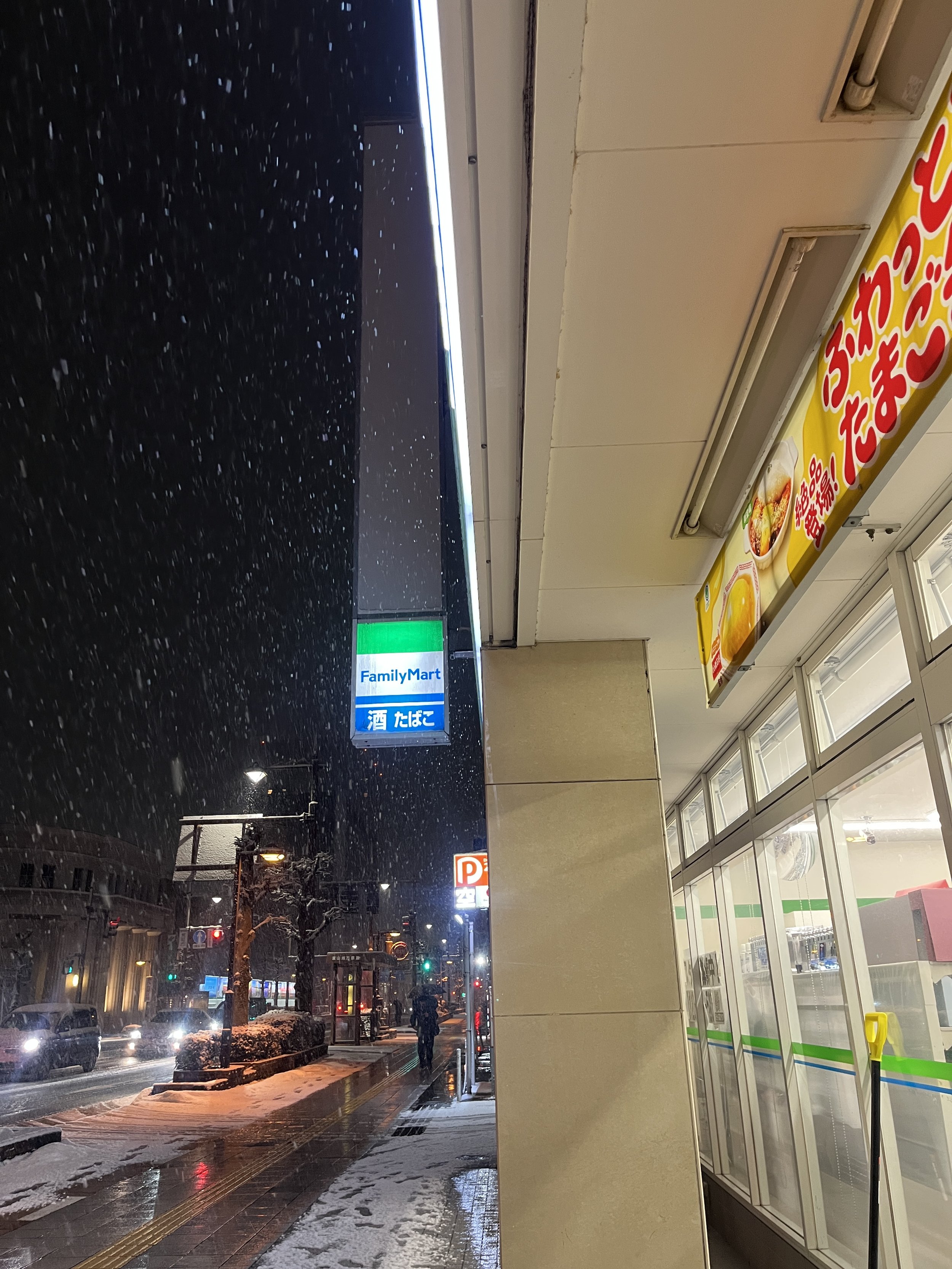
A konbini is more than a place to buy snacks. Most are open 24 hours a day and provide ATMs, toilets, printers, basic toiletries, umbrellas, simple meals and sometimes luggage-forwarding or ticket services. They are particularly useful after a late arrival, when restaurants have already closed or an unfamiliar hotel room contains less than expected.
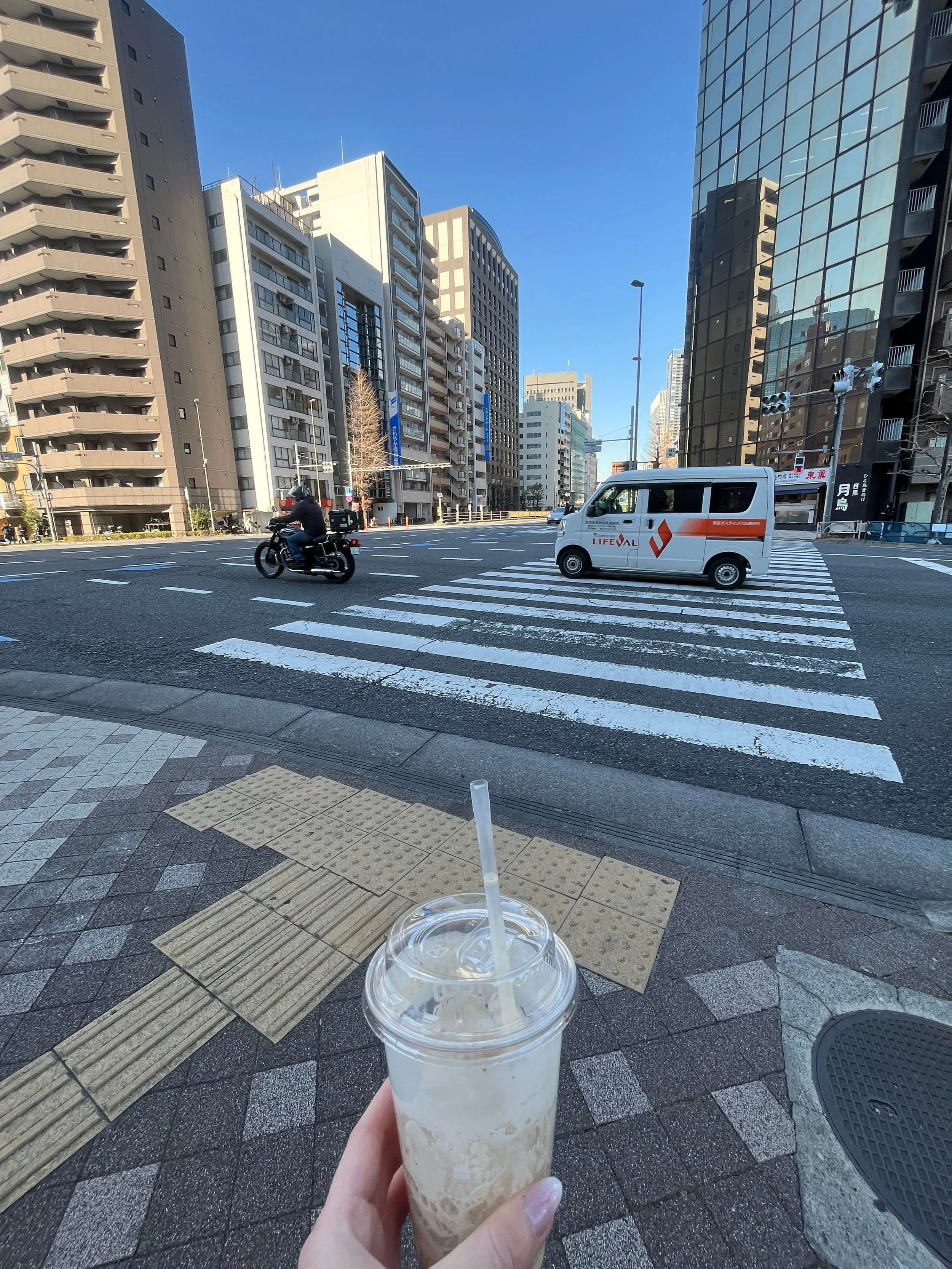
The three chains you will encounter most often are 7-Eleven, FamilyMart and Lawson, with Ministop and several regional chains appearing less frequently. Spend enough time in Japan and you will eventually be expected to choose your team. Mine is FamilyMart! Hardly a day passes when I do not miss its freshly made iced coffee: taking the cup of ice from the freezer, placing it in the self-service coffee machine and watching it fill before carrying it back out into the heat.
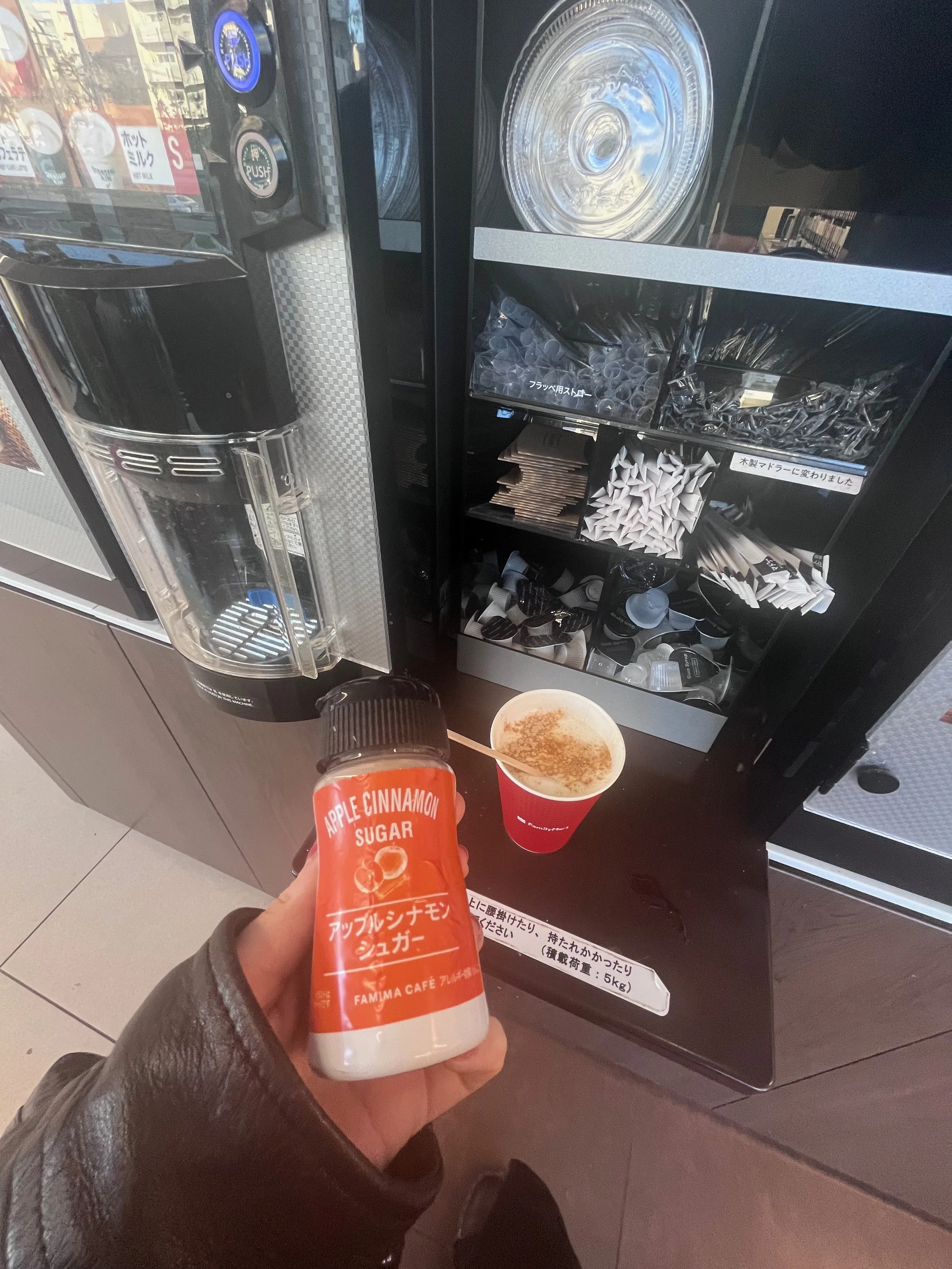
Japan has roughly 56.000 convenience stores. About one for every 2.200 residents. You may arrive without a favourite, but somewhere between your first onigiri and fifth iced coffee, you will choose a team!
Restaurant culture requires a little flexibility
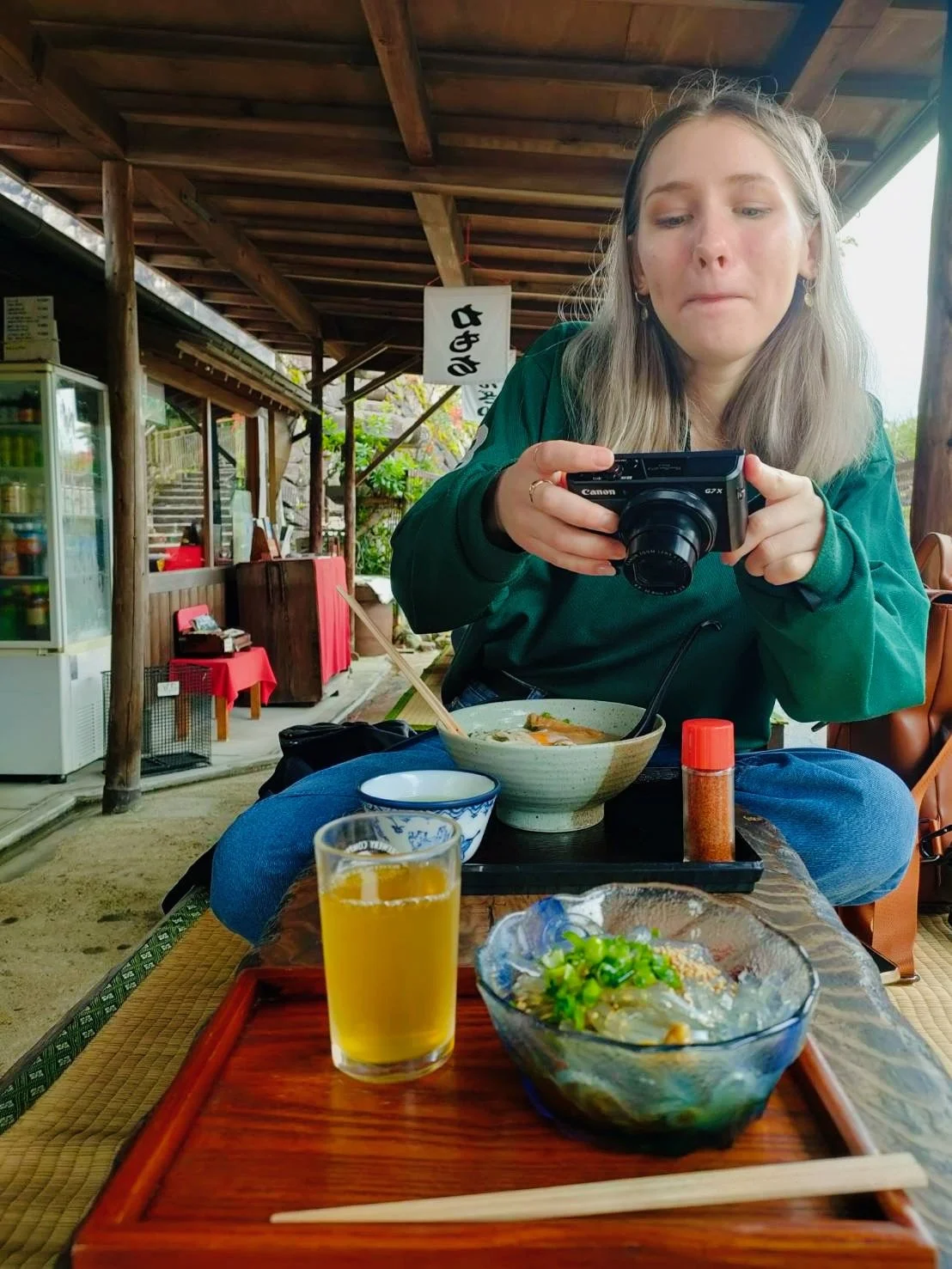
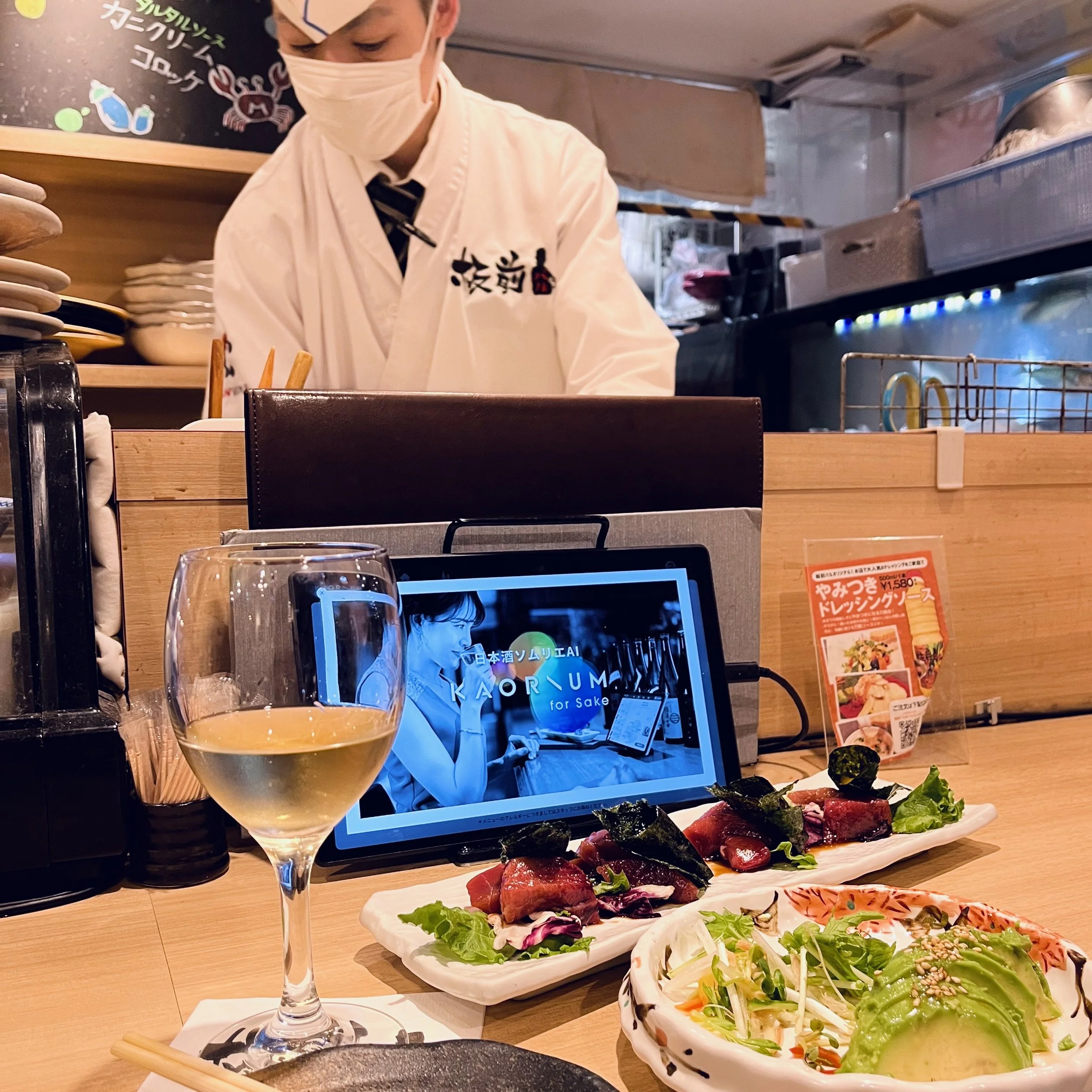
Restaurants can be smaller and less continuously open than first-time visitors expect. Many close between lunch and dinner, observe irregular rest days or stop serving once ingredients sell out. Google opening hours are useful but not infallible, particularly for small independent businesses. Check the restaurant’s own website or social media when making a special journey.
It is also less common than in many Western countries to ask for a dish to be substantially altered. A Japanese friend once explained the thinking to me with a rather direct comparison: you would not tell a surgeon how to operate, so why would you tell a chef how to cook? This does not mean that every restaurant will refuse a simple request. It means that the dish is often understood as the chef’s finished composition rather than a collection of ingredients that can be freely rearranged. In a small restaurant, the kitchen may also have neither the space nor the alternative ingredients required to prepare a separate version. If you are vegetarian, vegan or have a serious allergy, look for a restaurant that explicitly accommodates your needs or contact it before visiting. Do not assume that removing the visible meat makes a dish vegetarian: dashi, sauces and broths may contain fish or other animal ingredients. For allergies, carry a clearly written Japanese allergy card.
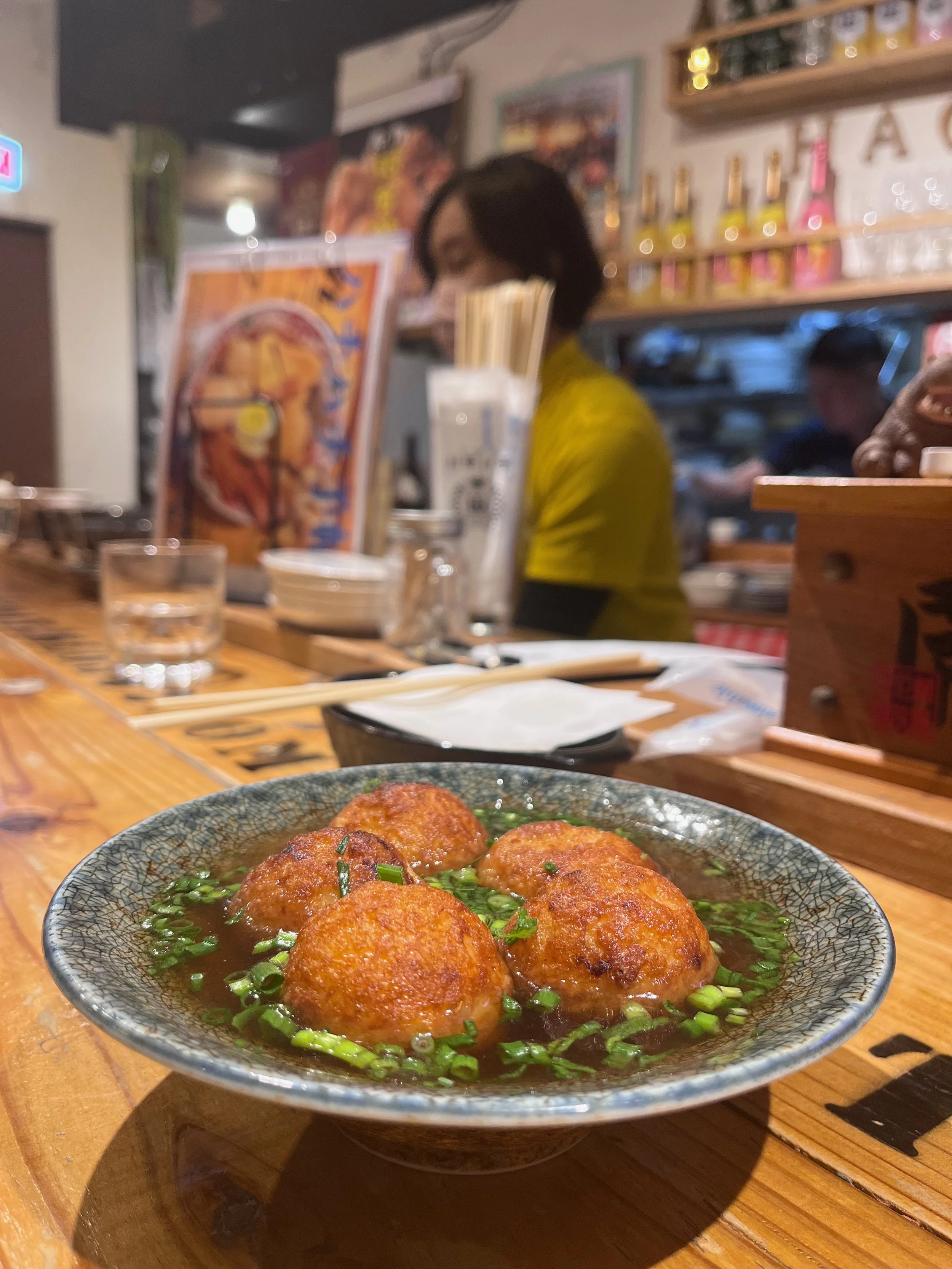
Not every restaurant accepts reservations, and not every meal needs one. Famous establishments and limited-seat counters may require advance planning, while an unplanned restaurant near your hotel can become one of the most memorable meals of the journey. Queues are common, but a long queue does not automatically indicate the best food. It may simply indicate the place most visible on social media.
The absence of public bins is real
Japan’s streets are remarkably clean, yet public rubbish bins can be difficult to find. Vending machines sometimes have recycling containers intended for bottles and cans purchased there, but these are not general waste bins. It is normal to keep a small bag for wrappers and carry rubbish back to the hotel. Convenience stores have increasingly restricted their bins to customers or removed them, so buying something does not guarantee a place to dispose of everything you are carrying.
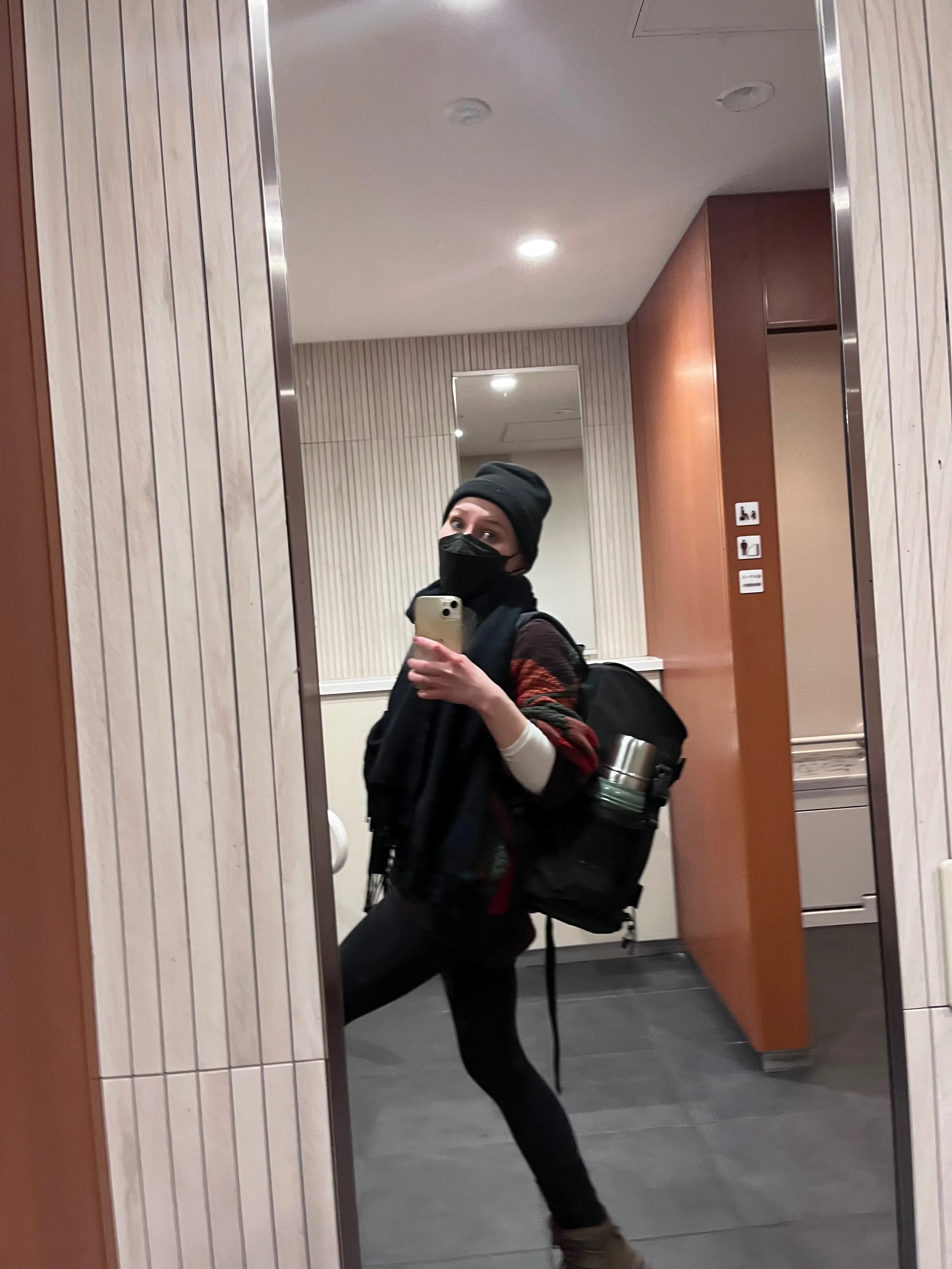
A small hand towel is useful for a similar reason: many public bathrooms have no paper towels, because people commonly carry their own.
Etiquette is mostly consideration
Visitors are often given intimidating lists of Japanese rules. Most everyday etiquette becomes easier if you understand its basic principle: avoid inconveniencing the people sharing the space.
Queue where others queue. Speak quietly on local trains. Allow passengers to leave before boarding. Do not block narrow streets or entrances while checking your phone. Ask before photographing people, private interiors or religious ceremonies. Eating on long-distance trains is normal; eating on a crowded commuter train is not. Walking while eating is discouraged in some places, but designated market areas may be built around street food. Context matters more than absolute rules.
Shoes mark another boundary. They are removed not only in private homes but sometimes in ryokan, temples, traditional restaurants, fitting rooms and medical practices. Look for a raised floor, slippers or rows of other people’s shoes. Toilet slippers, when provided, remain in that toilet.
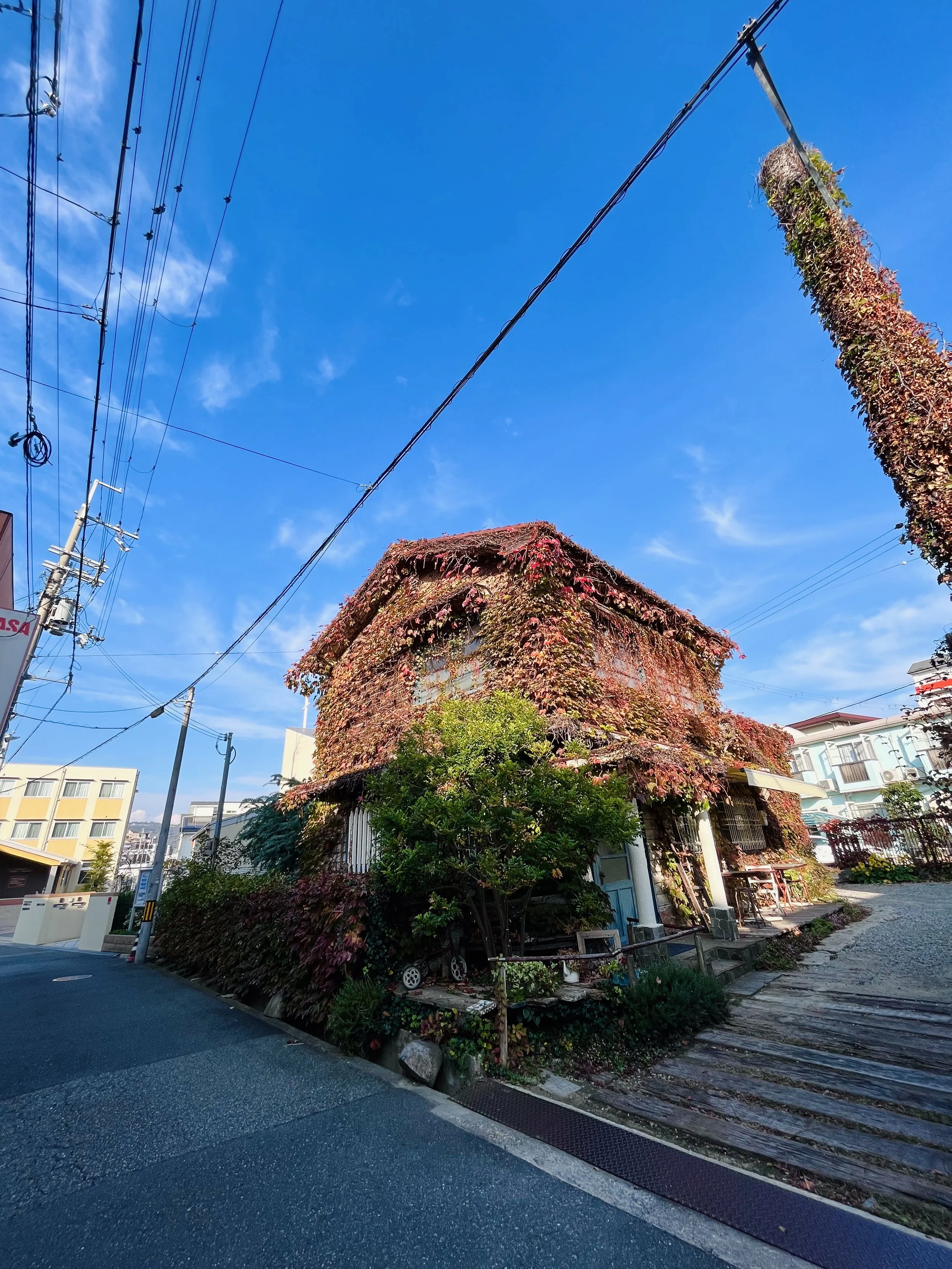
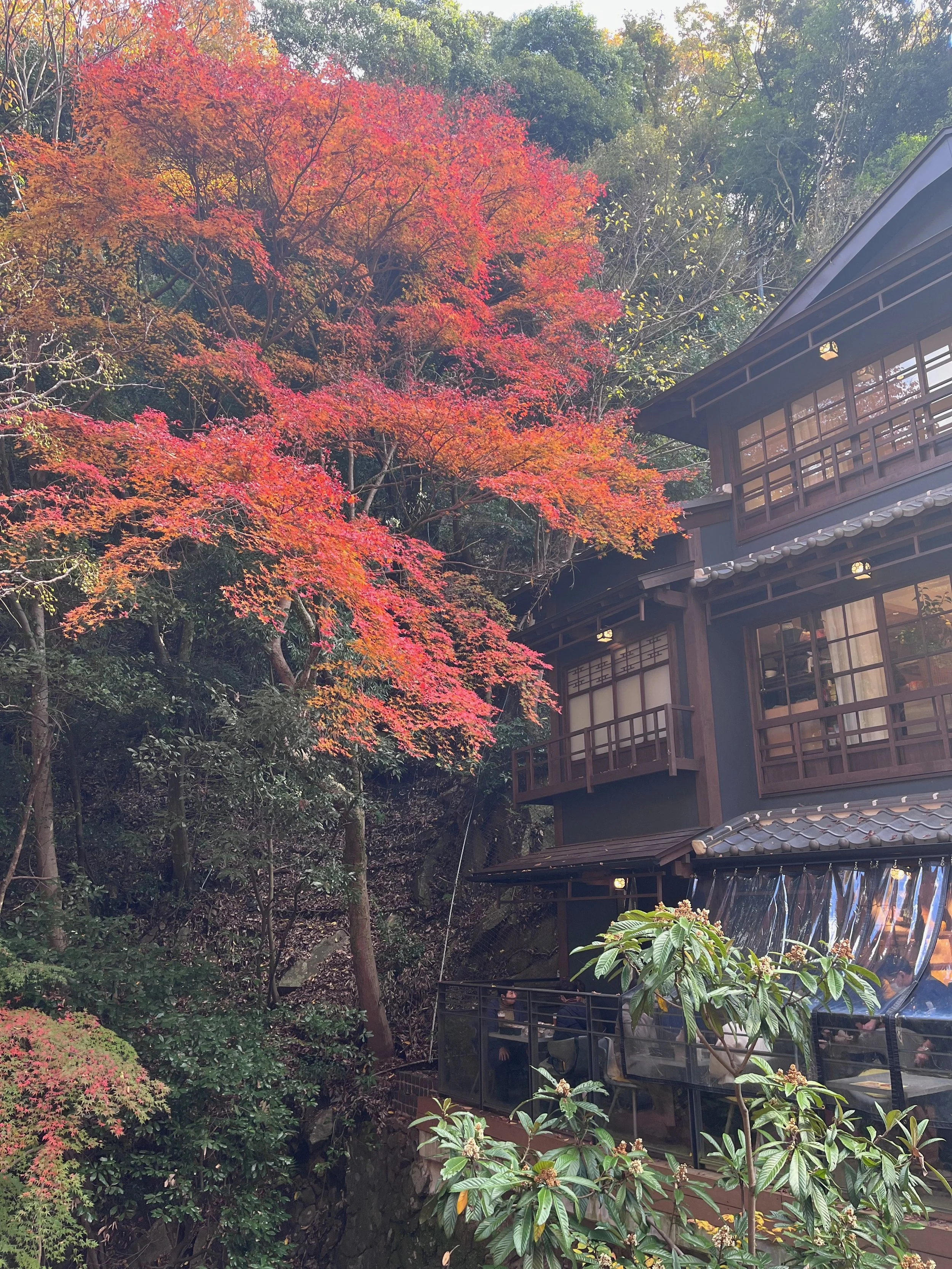
I swear there’s a coffeehouse inside this building!
Quietness is not the same as unfriendliness
Japanese communication can feel restrained to visitors accustomed to spontaneous conversation with strangers. An indirect answer may also be difficult to interpret: “That might be difficult” can sometimes simply mean no. This does not necessarily indicate coldness. Helpfulness is often expressed through action. Someone may walk you to the correct platform rather than give lengthy directions, or carefully draw a map without beginning a conversation.
At the same time, Japan should not be romanticised as universally polite or harmonious. It is a real society, and experiences vary. Allow people to be individuals rather than treating every interaction as an example of Japanese culture.
Check medication before you travel
Do not assume that a medicine permitted in your home country can automatically be brought into Japan. Rules depend on the substance, quantity and whether it is classed as a controlled drug. The Japanese Ministry of Health allows certain quantities of many medicines for personal use without a special application, while other medicines require advance permission or may be prohibited. Check the active ingredient — not only the brand name — on the official ministry website well before departure. Keep necessary medication in its original packaging and carry supporting documentation where appropriate. This is one subject on which a travel blog or social-media comment should never be your final source.
Leave space for ordinary Japan
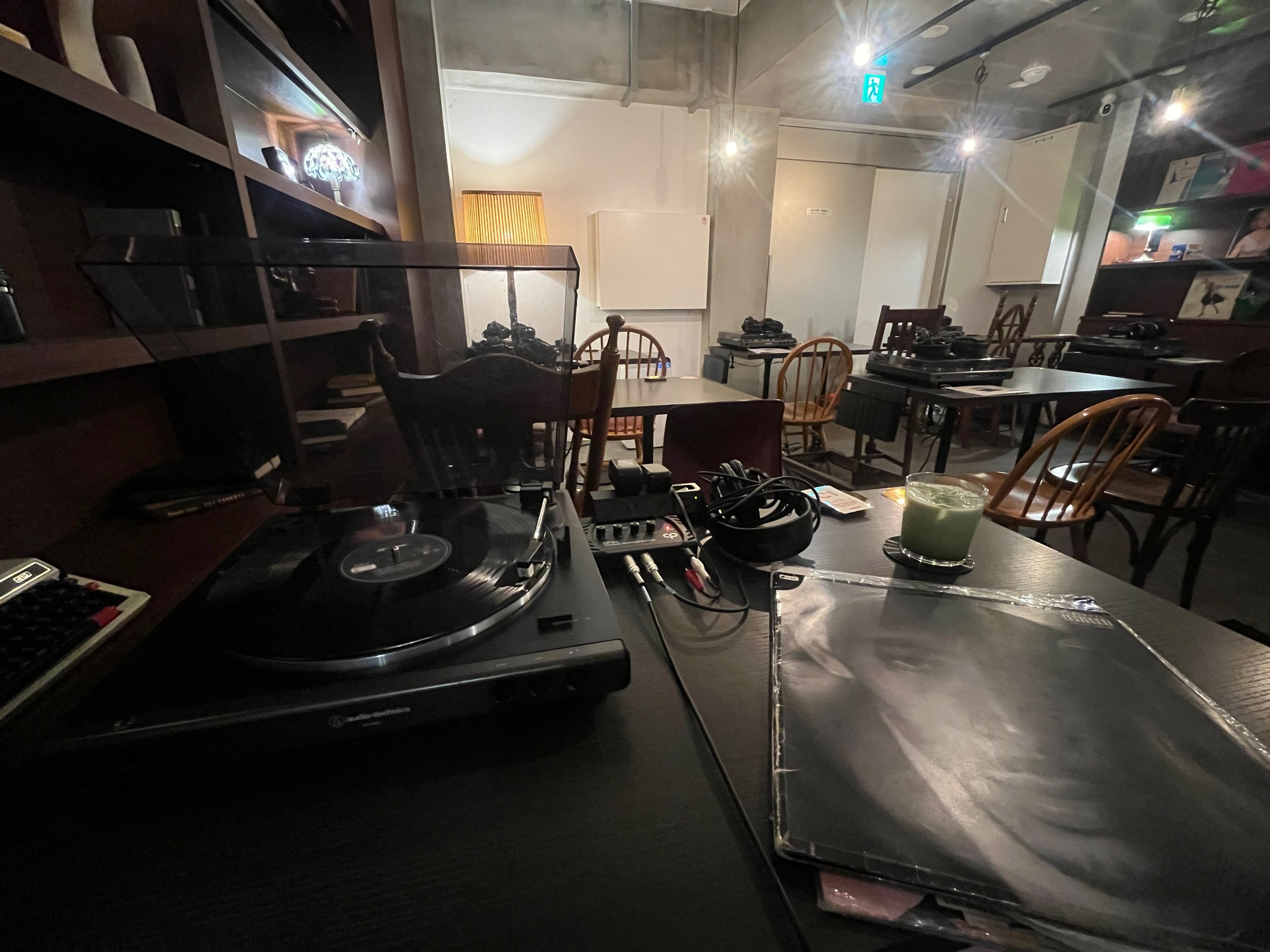
Planning is useful. It helps you choose the right neighbourhood, avoid arriving at a closed museum and understand which train will take you across the country. But the urge to prepare for every possibility can become another way of missing Japan. Some of the moments I remember most clearly were never items on an itinerary: an almost empty local train, breakfast in a quiet kissaten, the sound of a neighbourhood loudspeaker or an evening spent walking without trying to reach a famous sight.
In practice, Japan is remarkably manageable and safe. Major stations have English signs, trains are reliable and people will often go out of their way to help even when there is no shared language. You do not need to speak Japanese fluently. Learning a few expressions — sumimasen for attracting attention or apologising, arigatō gozaimasu for thanking someone and onegaishimasu when making a request — will still make everyday encounters easier. More important than memorising perfect phrases is being patient, observant and willing to communicate imperfectly. A smile, a translation app, a photograph or a place name written in Japanese can solve many situations.
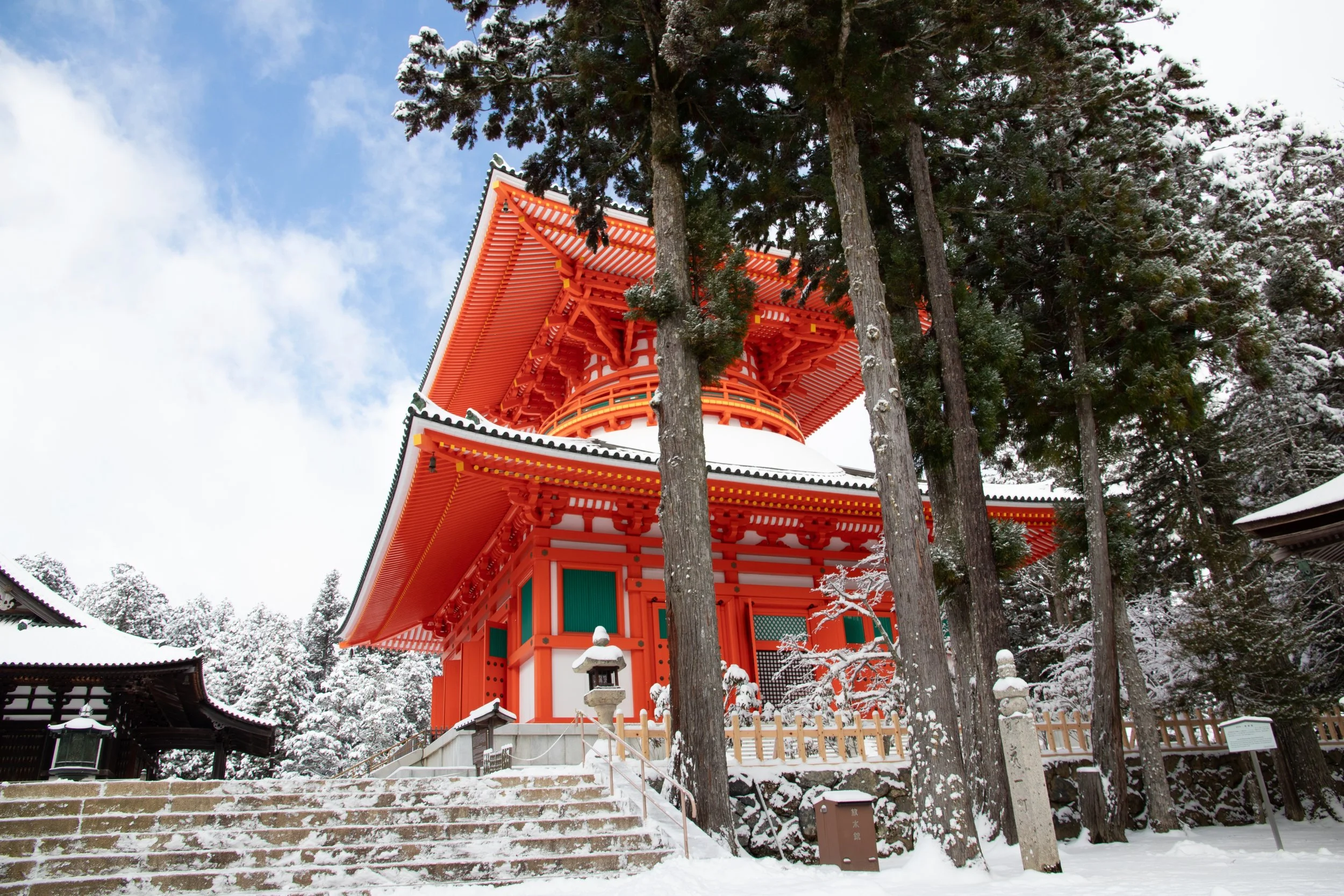
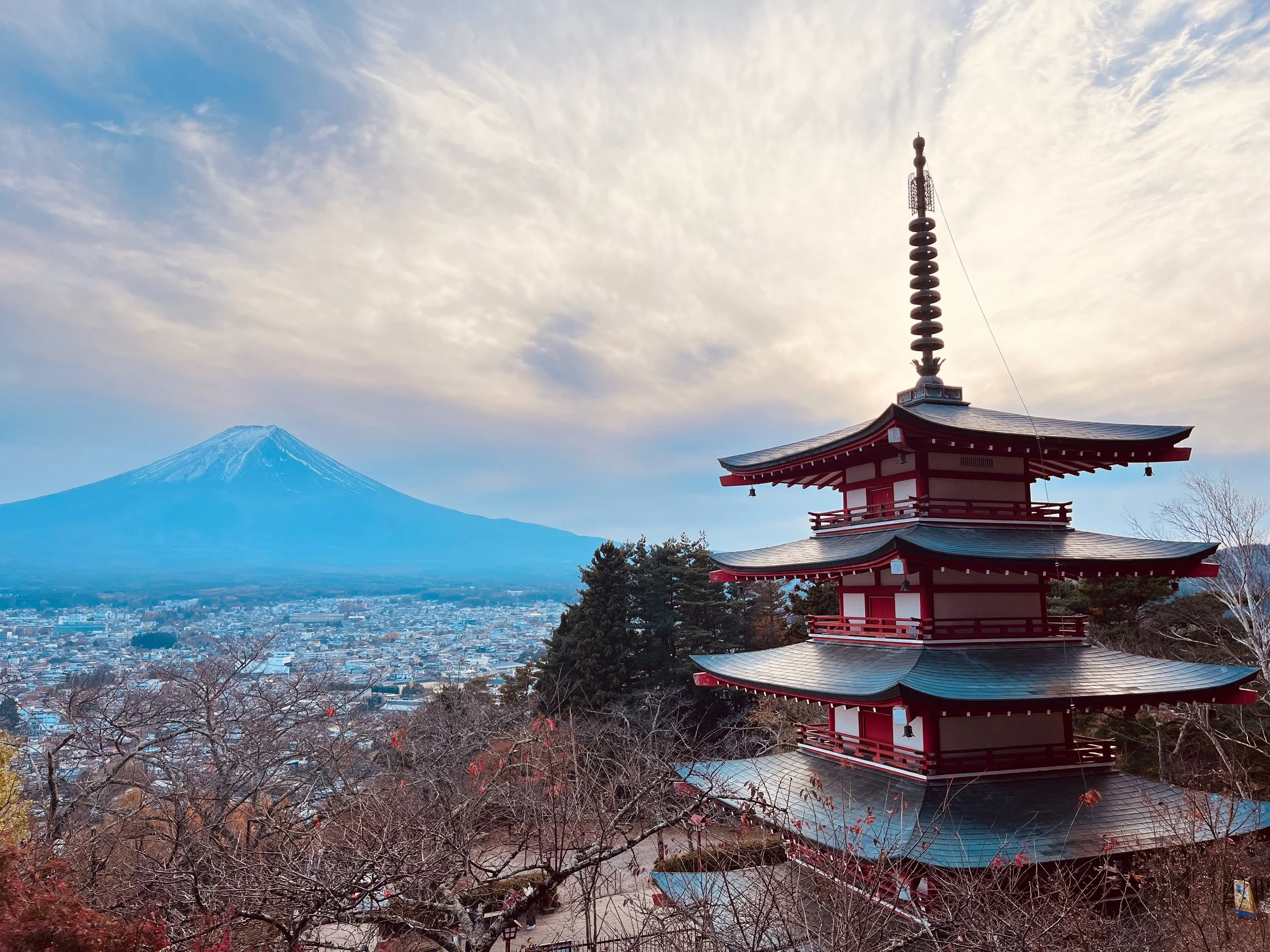
The vermilion Konpon Daitō rises above the Danjō Garan temple complex on Mount Kōya in Wakayama. The great pagoda is one of the most recognisable buildings at the centre of Shingon Buddhism in Japan.
More Frequently Asked Questions
-
Japan loves kisetsu gentei (季節限定): food and drinks available only for a particular season. Cherry-blossom sweets appear in spring, chestnut and sweet-potato flavours in autumn, and convenience-store shelves seem to change whenever you have finally chosen a favourite.
Enjoy it while it is there. By your next journey, it will probably have disappeared—replaced by something equally tempting and entirely different. Seasonal exclusivity is part of the pleasure, although it can feel suspiciously like heartbreak.
-
Railway companies, towns, museums, police departments and sometimes services you did not know required emotional representation may all have one. Do not resist. By the end of the journey, you will probably have formed a sincere attachment to a regional character shaped like a vegetable.
-
Station melodies help signal arrivals and departures, but they also give each station a small acoustic identity. After a while, you may recognise your stop by its tune before you read the sign. Some melodies will remain in your head considerably longer than the journey itself.
-
You can trust it to leave on time. The more important question is whether you can reach it on time. Trains in most Japanese cities do not run throughout the night, and missing the final connection may result in an expensive taxi or an unexpectedly long evening.
-
Some appear to bow because they have learned that bowing may result in a deer cracker. This is a transaction, not necessarily a moment of spiritual connection. Keep the crackers away from your map, clothes and anything else you do not wish to negotiate over.
-
Some fruit in Japan is cultivated and presented as a luxury gift rather than an everyday grocery. The perfectly shaped melon in an elegant box is not the only melon available, so there is no need to reconsider your entire food budget. Ordinary supermarkets sell ordinary fruit too.
-
Not quite. Japan certainly has eccentric cafés, unusual mascots and products nobody appeared to be asking for. But the internet tends to collect the strangest examples and present them as ordinary daily life. Most of Japan is people commuting, buying groceries and wondering what to have for dinner — occasionally beneath a sign featuring a smiling municipal radish.

From IC cards and luggage forwarding to restaurant hours and unspoken rules, these are the practical details I no longer consciously notice, but wish every first-time visitor knew. This is my attempt to remember them and to answer the questions people still ask me before their first journey: What should I know about Japan?