Between the sweetness of kawaii, the radical silhouettes of Japanese designers and the quiet pleasure of discovering something second-hand lies a fascinating story of culture and identity.


At 150 centimetres tall, shopping in Japan is one of life's small pleasures. Clothes fit, and what is supposed to be oversized occasionally looks intentionally oversized. For someone accustomed to shopping in Germany, this alone feels like a luxury. But there are other reasons why I particularly enjoy exploring fashion in Japan. I love second-hand shopping, discovering unfamiliar labels and observing how people put their outfits together. How does a culture that places considerable importance on social harmony produce some of the world's most experimental fashion? Why is cuteness such a prominent aesthetic among adults? And why do so many second-hand garments in Japan look as though nobody has ever worn them?
Beyond the Harajuku Stereotype
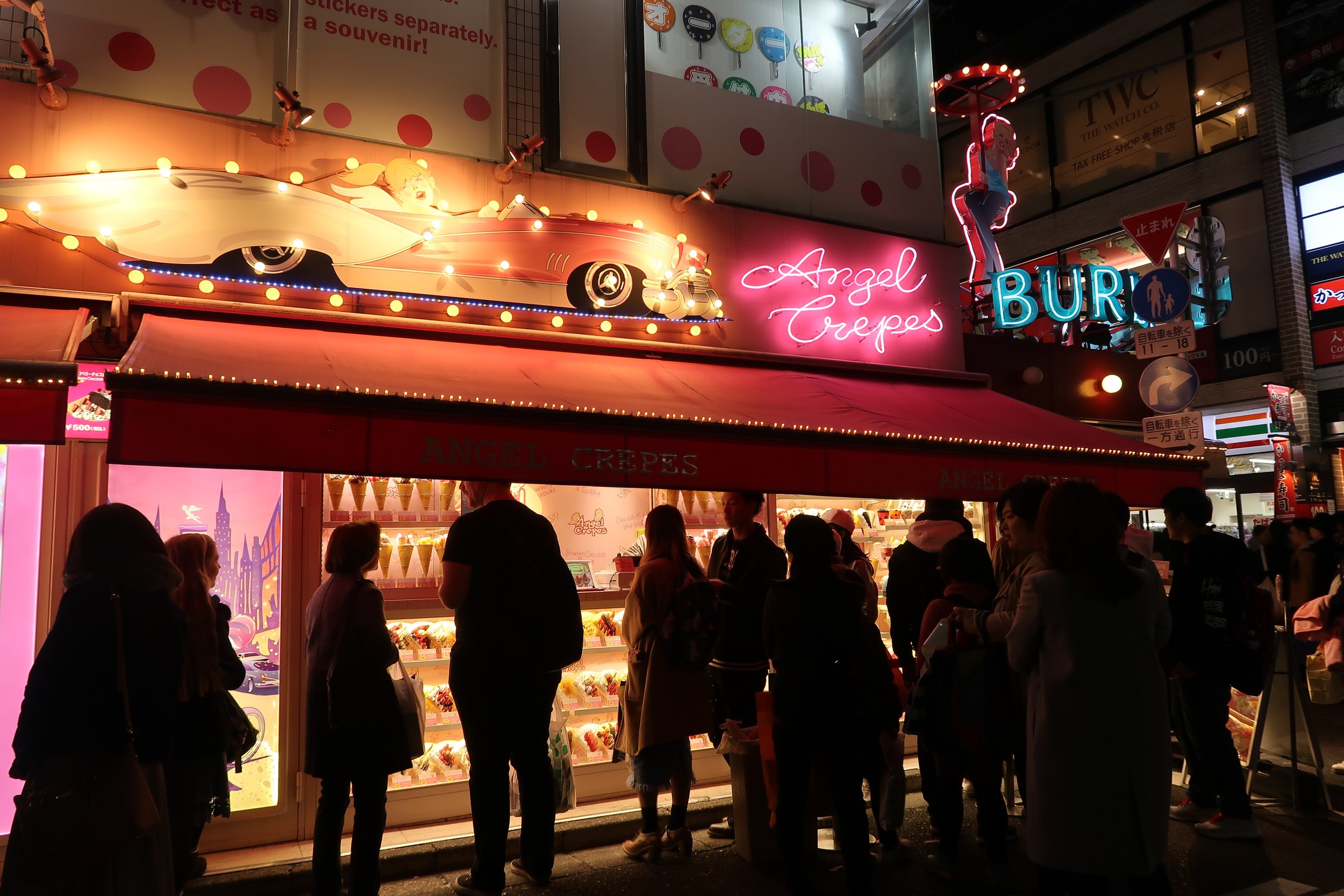
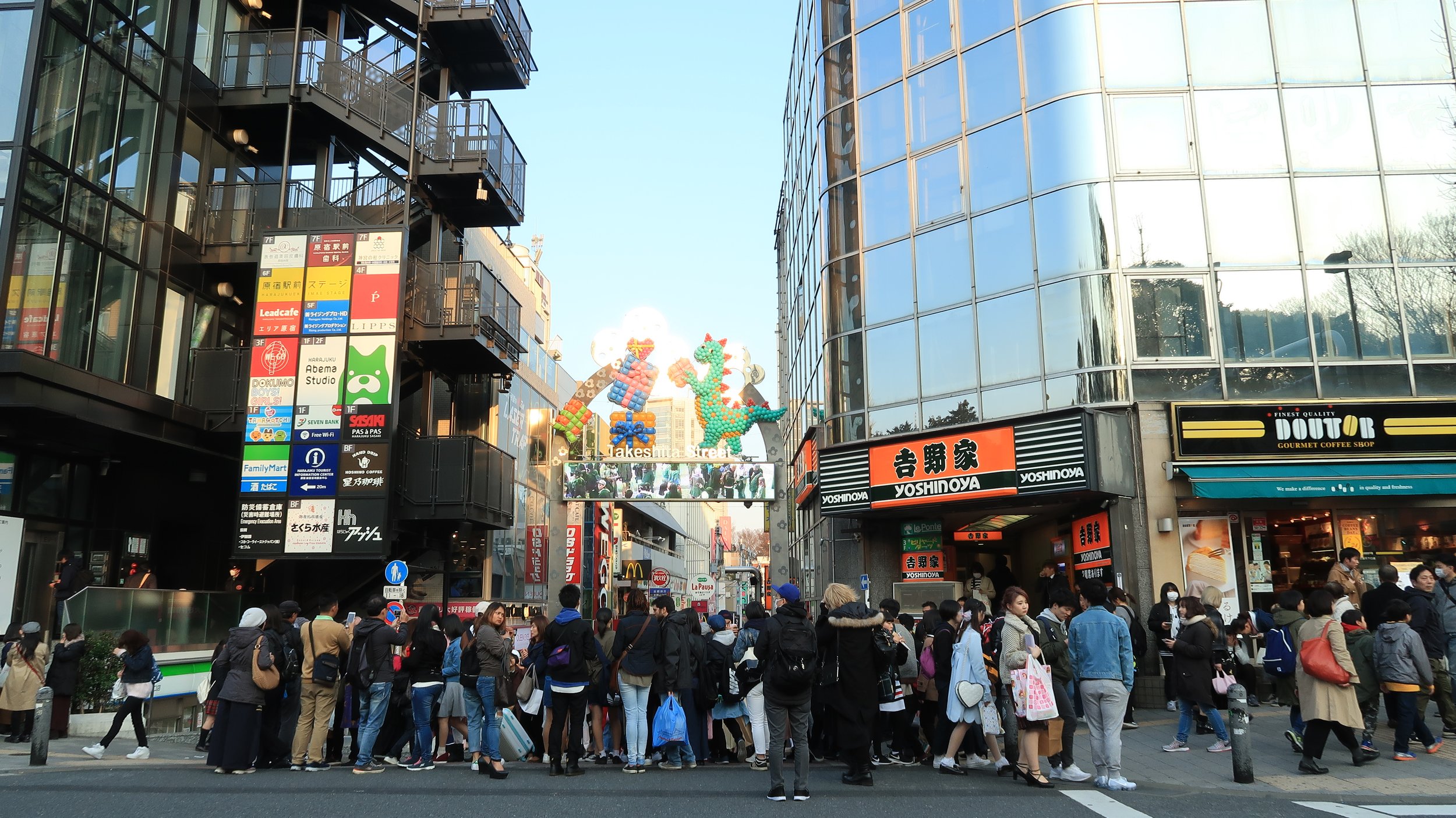
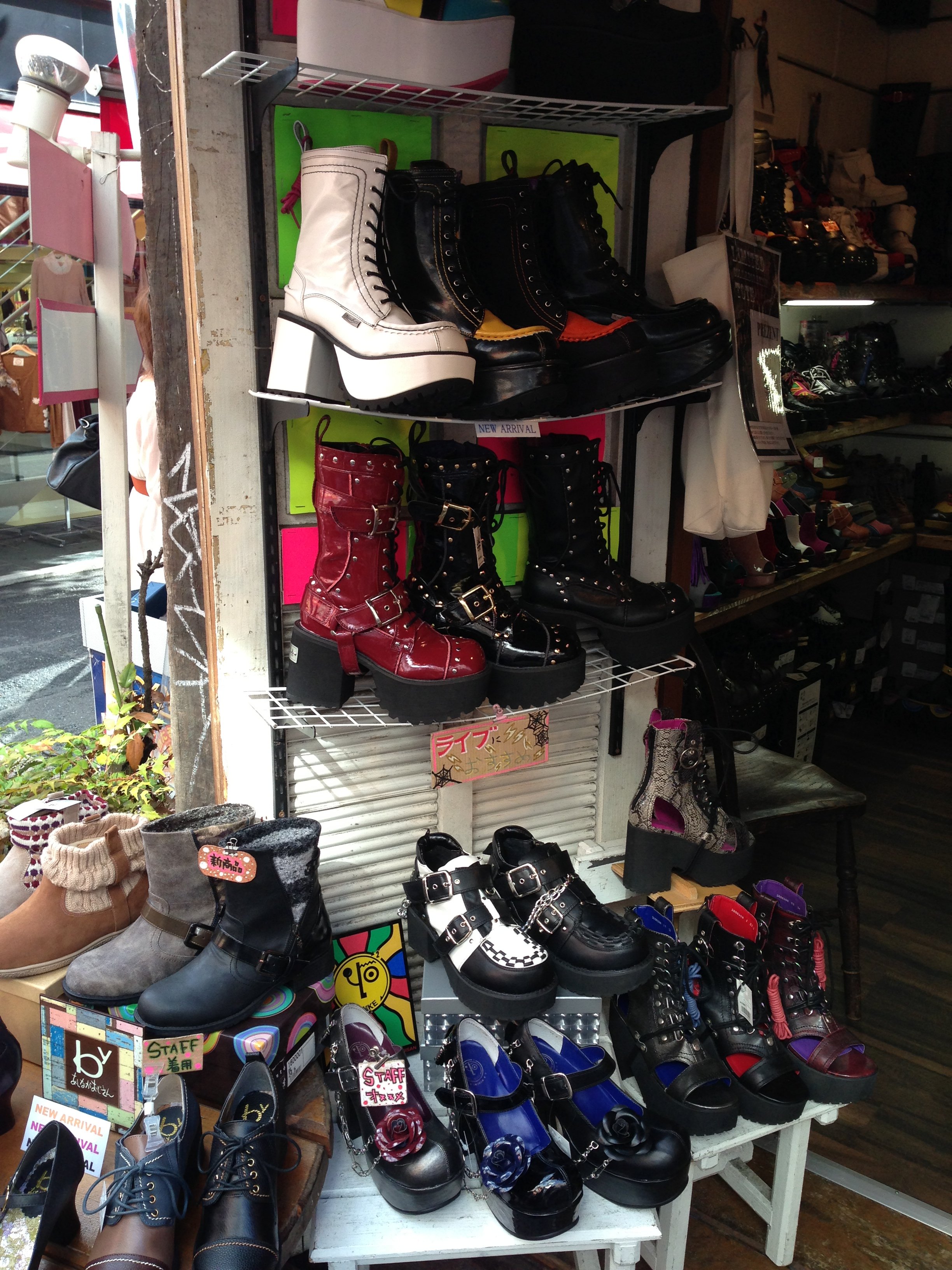
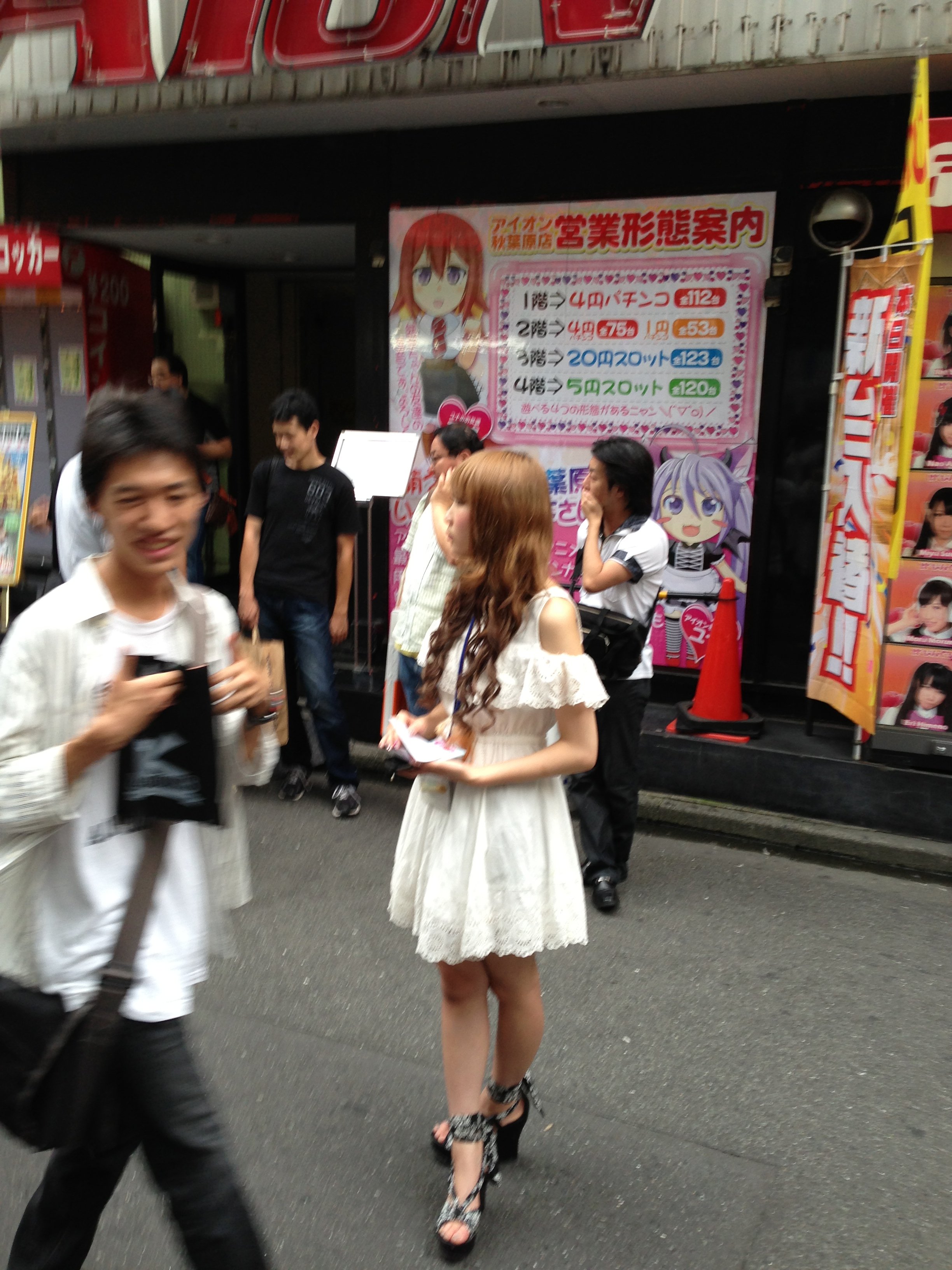
For decades, the international perception of Japanese street fashion has been shaped by images of Harajuku: colourful hair, elaborate accessories, theatrical outfits and wonderfully unconventional combinations of clothing. Much of this fascination can be traced back to FRUiTS, the street fashion magazine founded by photographer Shoichi Aoki in 1997. Its photographs documented young people who combined handmade garments, vintage clothing and designer pieces with remarkable creativity. As a teenager, I loved browsing TokyoFashion.com, a website dedicated to documenting Japanese street style. I could spend hours scrolling through photographs of people on the streets of Harajuku and Shibuya.
But Tokyo's everyday fashion is considerably more nuanced than these iconic images suggest. Muted colours, wide trousers, oversized jackets, delicate feminine clothing and carefully considered layers coexist throughout the city. What makes many outfits interesting is not necessarily an unusual individual garment, but the relationship between proportions, textures and materials.
Kawaii and the Cultural Construction of Femininity
One of the most fascinating aspects of Japanese fashion is the cultural significance of kawaii (可愛い). Usually translated as cute or adorable, kawaii extends far beyond clothing. It appears in advertising, food packaging, public institutions and everyday objects. Unlike in many European contexts, cuteness is not necessarily something one is expected to outgrow.
Over time, kawaii developed into a recognisable aesthetic associated with softness, youthfulness, innocence and emotional approachability. In women's fashion, this can be expressed through delicate fabrics, bows, floral patterns, soft colours and romantic silhouettes. What I find particularly interesting from a European perspective is the different emphasis placed on femininity. While certain Western beauty ideals celebrate maturity, sensuality and confidence, Japanese popular culture has frequently attached considerable value to sweetness and youthful appearance.
Like the first time someone complimented me on my round face, I was rather confused. Having grown up in Germany, I had never particularly associated round facial features with a beauty ideal. If anything, Western beauty trends tend to emphasise defined cheekbones and a sculpted jawline. It was a small but revealing cultural encounter. What we perceive as attractive is not nearly as universal as we might assume. Neither society has a single ideal of femininity, of course. But the cultural legitimacy of appearing cute as an adult woman is particularly noticeable in Japan.
Living in Asia at the age of sixteen had a profound influence on my confidence and my understanding of beauty. Being exposed to different aesthetic ideals allowed me not only to appreciate features in myself that I had previously overlooked, but also to recognise beauty in others that I might never have noticed had I spent my entire life within one cultural environment. One thing I particularly appreciate about certain approaches in Japan is the idea of embracing and accentuating existing features rather than trying to correct them. A round face? Why try to make it appear slimmer when you could emphasise its softness and make it look even rounder?
There was something incredibly liberating about discovering that a feature I had never considered particularly desirable could be precisely what someone else found beautiful. Of course, Japan has its own restrictive beauty standards, and no culture is entirely free from the pressure to look a certain way. But experiencing different ideals made me question the authority of any single one.
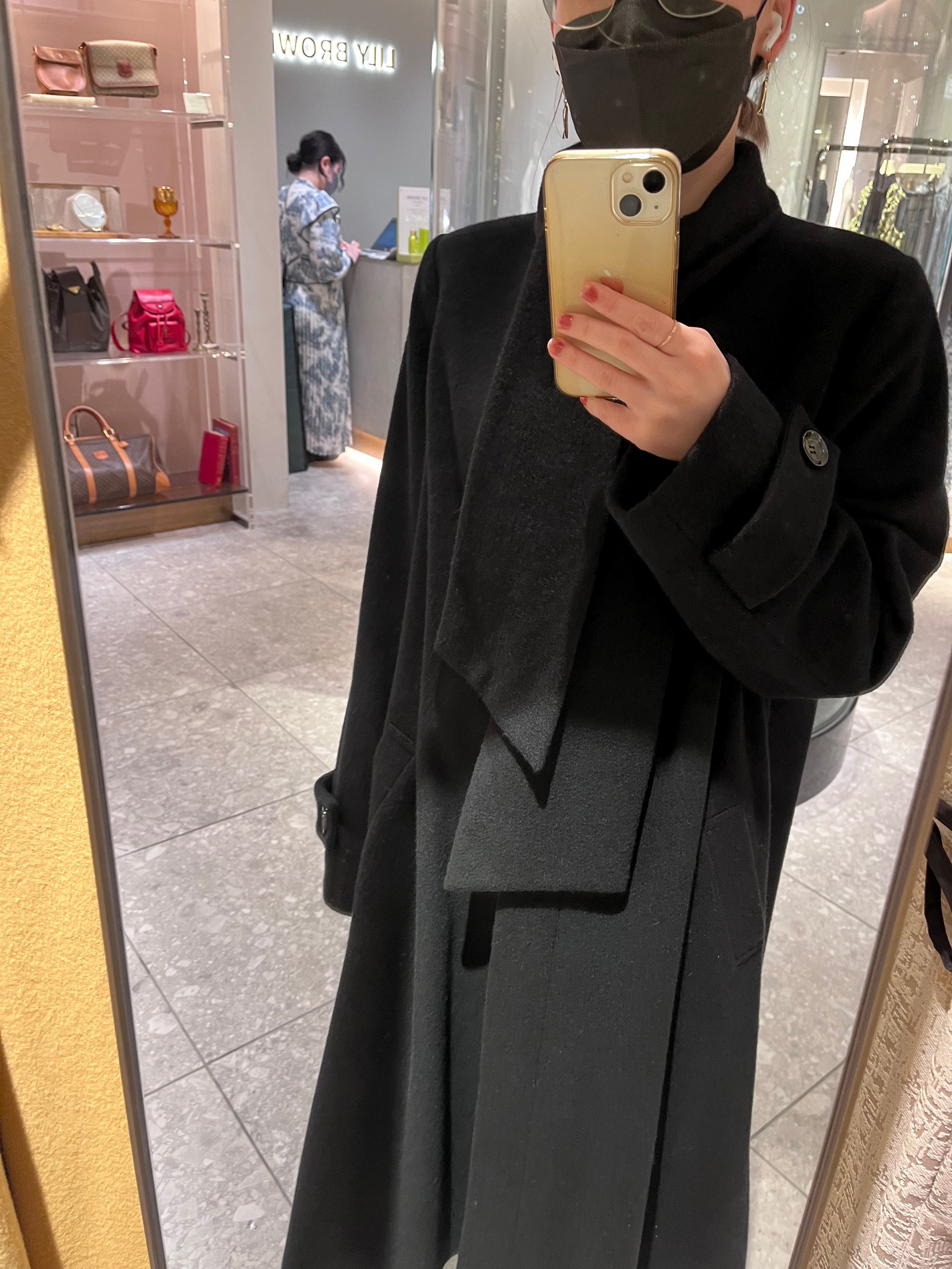
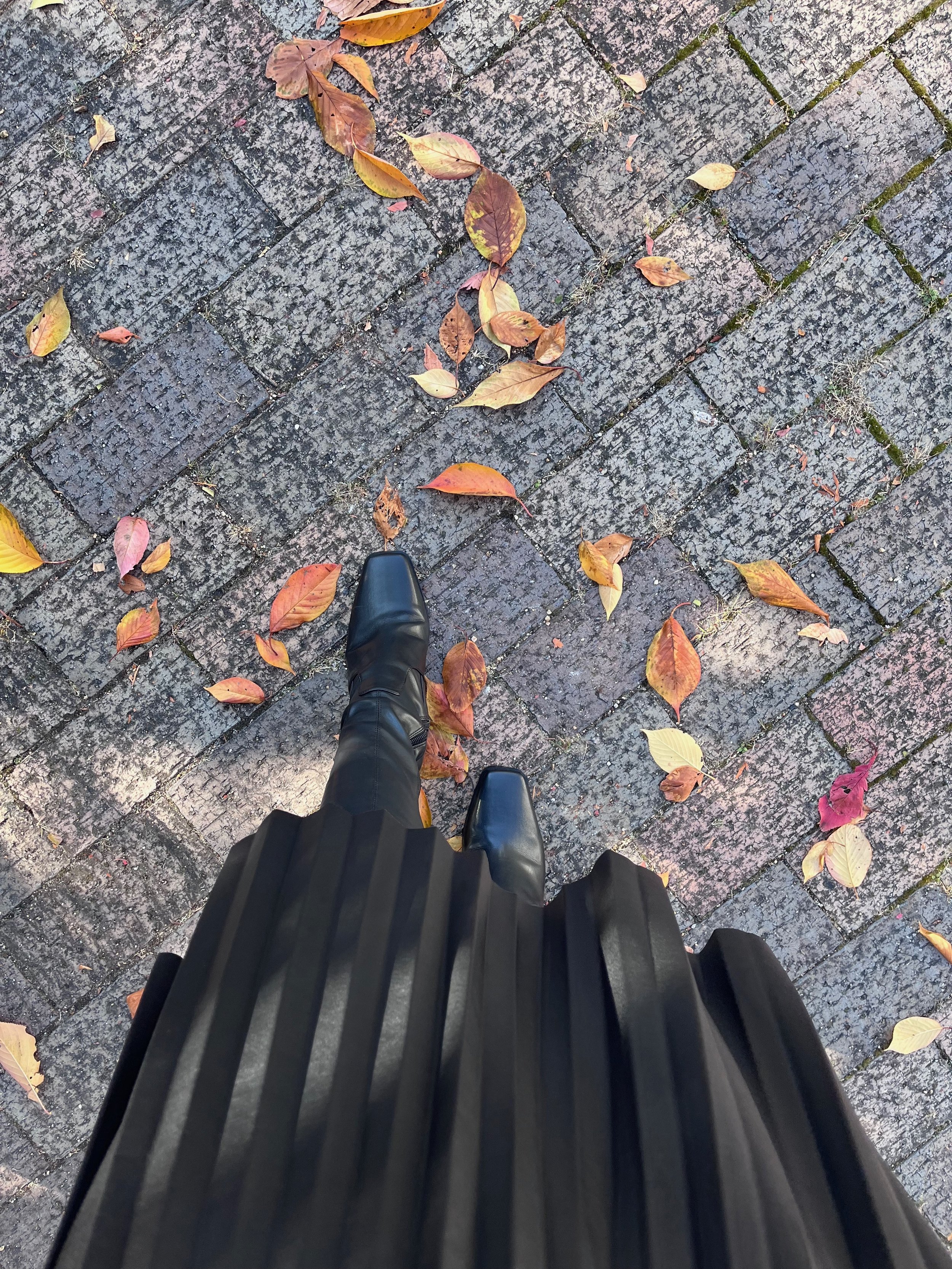
The Paradox of Conformity and Individuality
Japanese fashion becomes particularly interesting when considered alongside the importance of social context. The expression TPO — Time, Place and Occasion — is widely used in Japan to describe the appropriateness of appearance and behaviour in different situations. School uniforms, workplace dress codes and formal clothing for ceremonies illustrate how appearance can communicate respect for a particular environment and the people within it. Clothing is not always understood exclusively as an expression of the individual. It can also communicate one's relationship to a group. Yet Japan has produced some of the most visually expressive fashion subcultures in the world.
Gyaru historically challenged conventional beauty standards through dramatic make-up, dyed hair and, in some variations, deeply tanned skin. Decora embraced excessive accessories and playful colours. Harajuku became a space in which young people could experiment with alternative identities. This apparent contradiction is not necessarily a contradiction at all.
The sociologist Georg Simmel described fashion as a negotiation between two human desires: the desire to belong and the desire to distinguish oneself. Subcultures illustrate this particularly well. Dressing differently from mainstream society can simultaneously create a sense of belonging within another community. Even rebellion, it seems, has its own dress code.

Where Fashion Begins: An Afternoon in Nippori
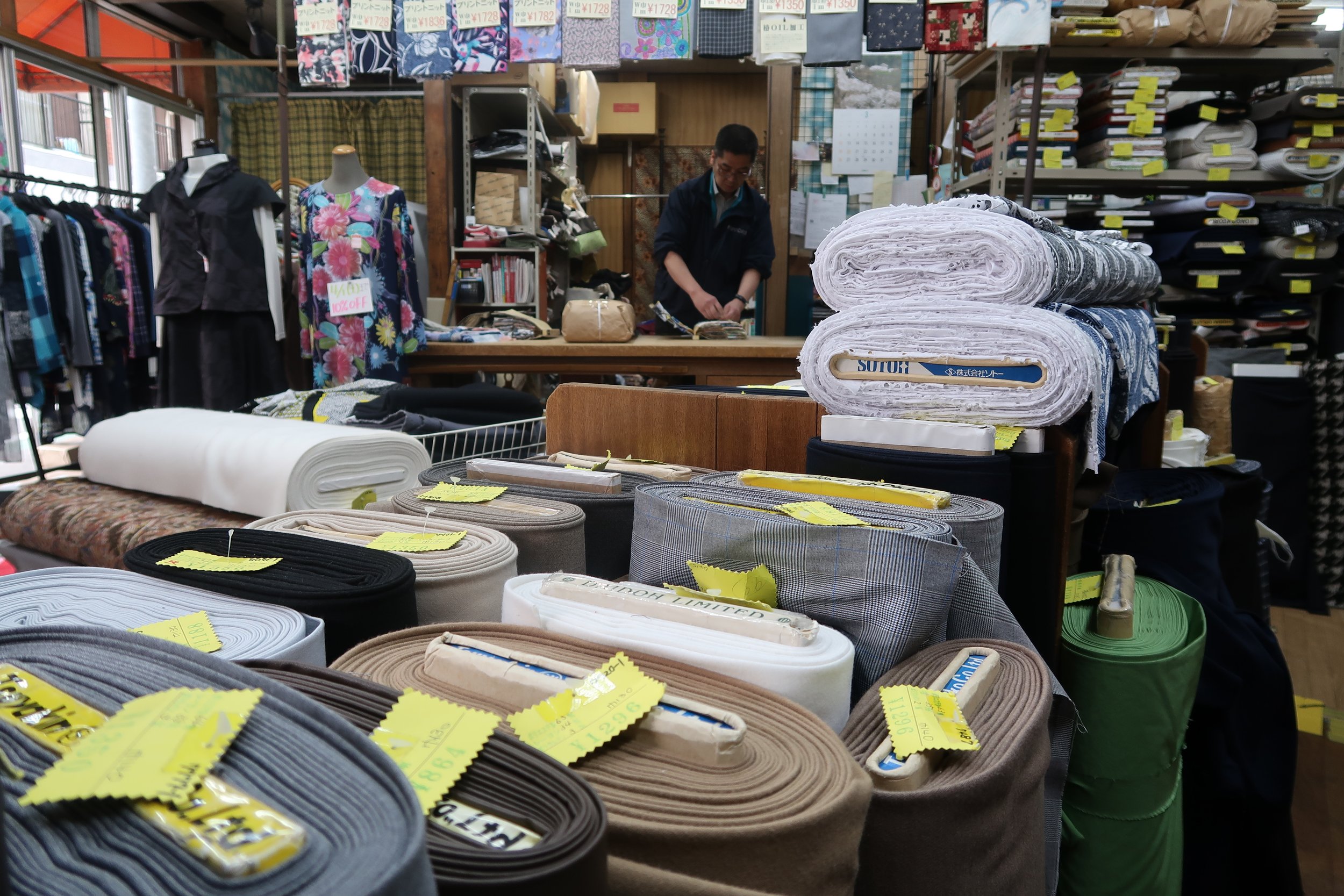
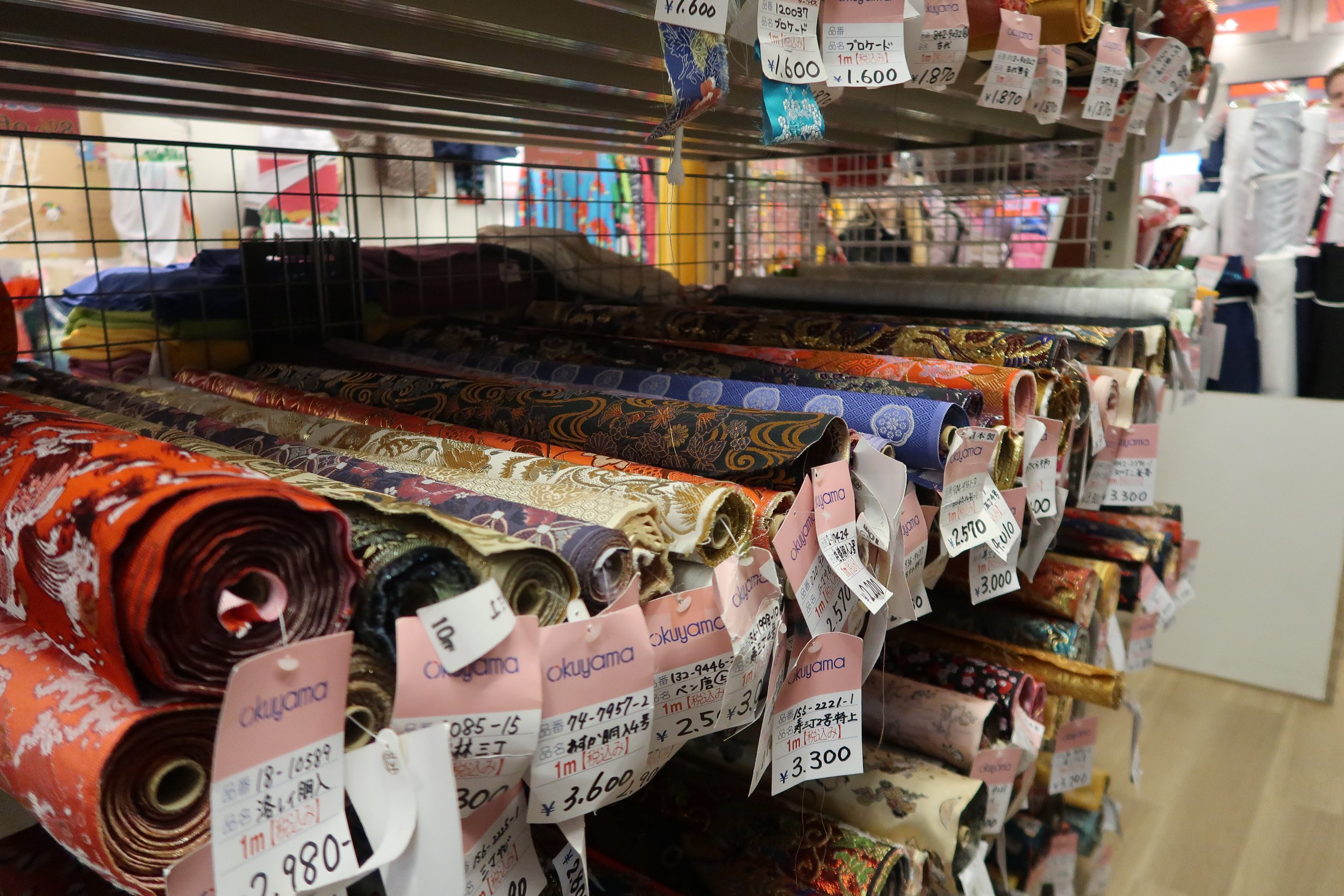
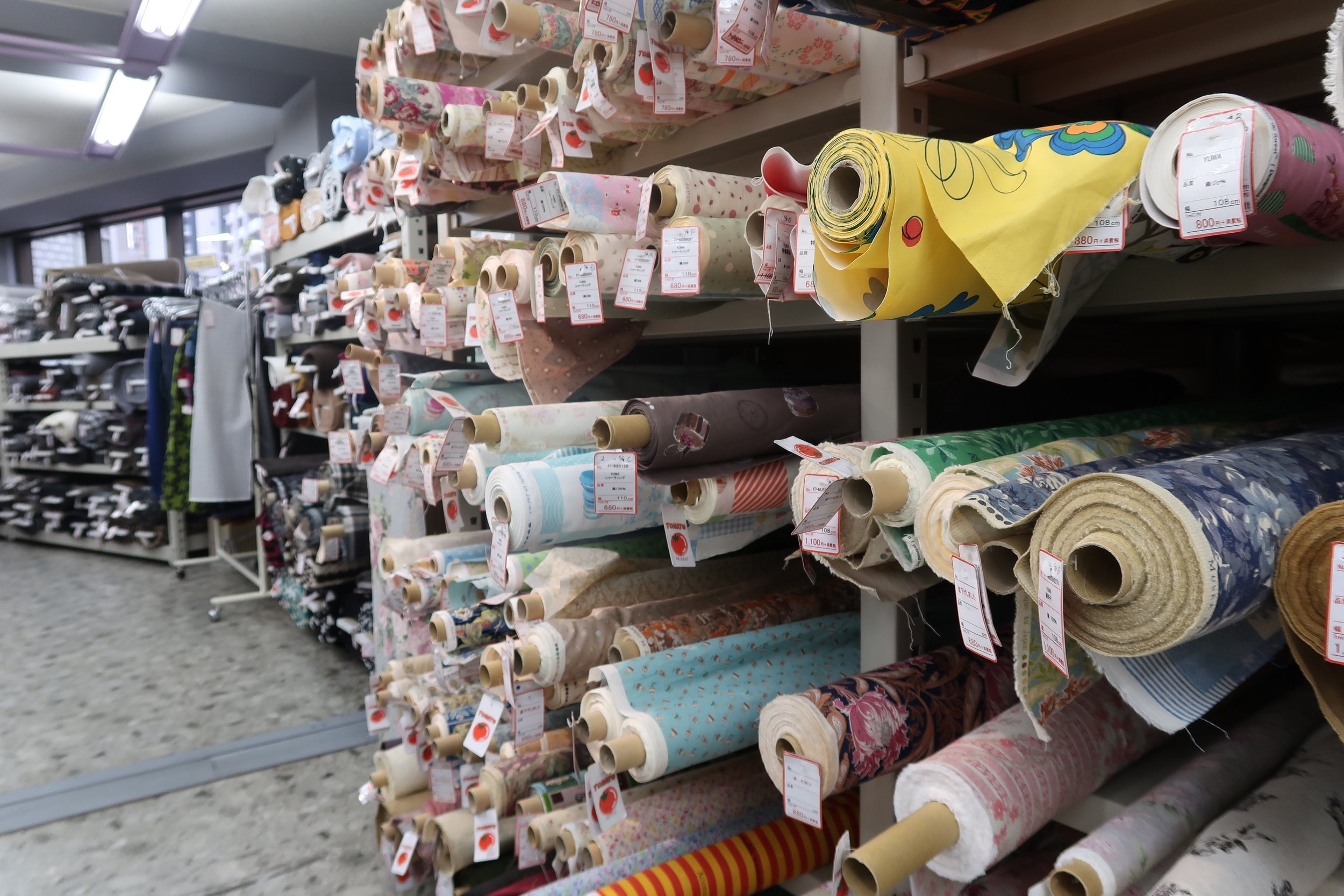
One of my favourite fashion-related experiences in Tokyo had surprisingly little to do with finished clothing. I visited Nippori Textile Town (日暮里繊維街) with my grandmother, who sews. This part of Tokyo is dedicated to fabrics, threads, buttons and the countless small components that go into making a garment.
Located in Tokyo’s Arakawa district, just a short walk from Nippori Station, Textile Town stretches along approximately one kilometre of street and is home to around 90 specialist shops. Its history dates back to the Taishō period (1912–1926), when textile merchants began establishing businesses in the area, trading surplus fabrics and remnants from manufacturers.
Today, the district attracts professional designers, fashion students, costume makers and home sewing enthusiasts. Shops specialise in everything from Japanese printed cotton and denim to lace, leather, embroidery, buttons and ribbons. One of its best-known establishments, TOMATO, has several shops throughout the neighbourhood, including a five-storey main store dedicated to fabrics.
There is something particularly enjoyable about exploring a place like this with someone who understands how to work with fabric. What I might appreciate for its colour or pattern, my grandmother can also assess in terms of its weight, texture, construction and possibilities. We are essentially looking at the same object through two different sets of knowledge. And perhaps that is what makes Nippori such an interesting place to explore, even if, like me, you have neither the intention nor the patience to make your own clothes. It invites you to look at fashion before it becomes fashion. We consider its appearance, its price and whether it fits. Rarely do we think about the decisions that preceded it: the selection of fibres, the construction of the fabric, the pattern, the stitching and the labour involved. The Japanese concept of monozukuri (ものづくり), literally the making of things, is often associated with technical knowledge, craftsmanship and dedication to production. It is a useful concept through which to consider fashion, particularly at a time when clothing has become increasingly inexpensive and disposable.
Why I Love Second-Hand Shopping in Japan
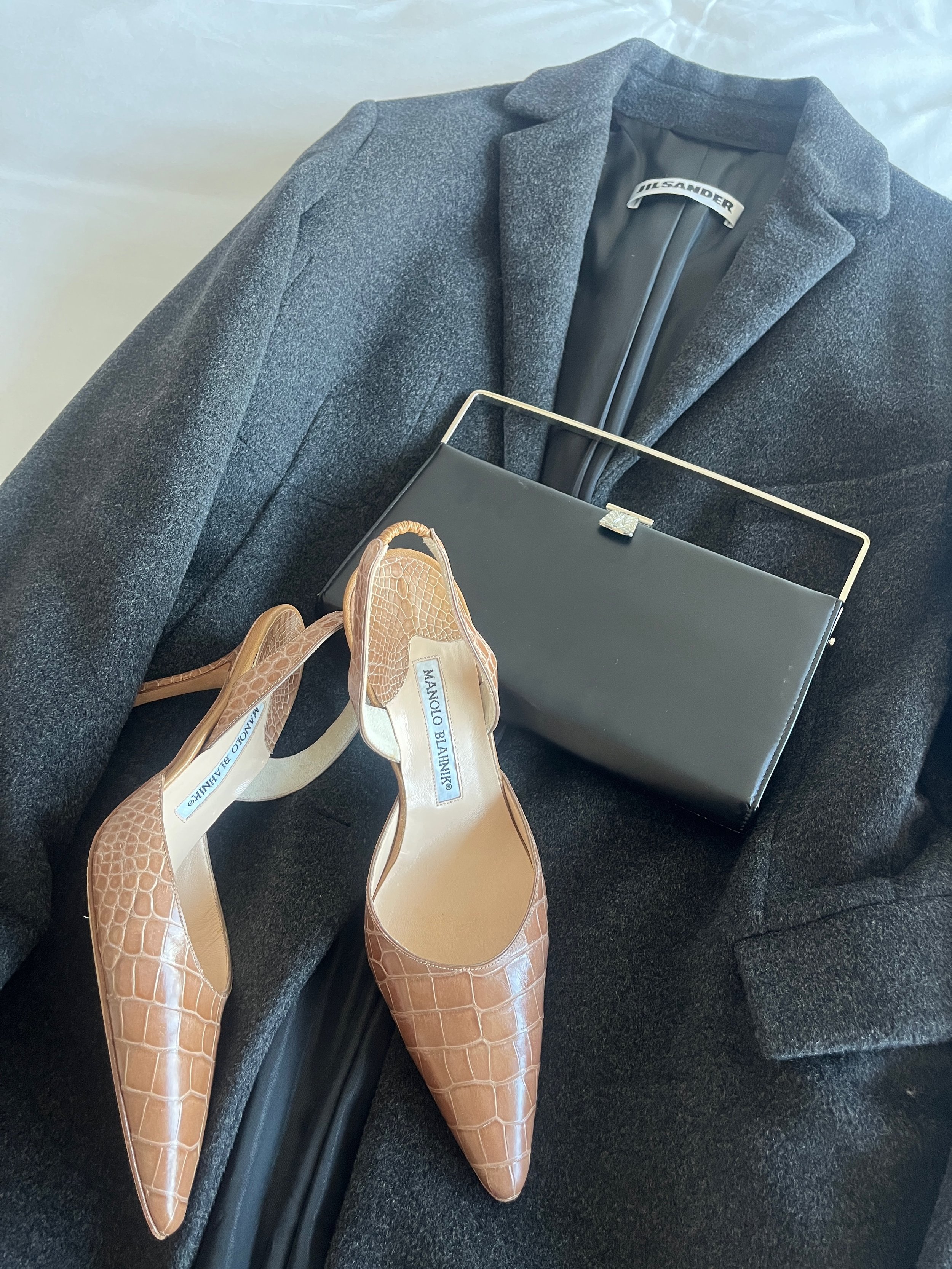
Partly because of the variety, partly because of the unexpected discoveries, and partly because being 150 centimetres tall suddenly becomes a considerable shopping advantage. But what repeatedly surprises me is the condition of the clothing. In Japan, I regularly encounter second-hand garments that look almost new.

A culture of looking after things
One Japanese expression that offers an interesting perspective on this is mottainai (もったいない). It expresses a sense of regret when something is wasted or its value is not fully appreciated. The concept can be applied to food, materials, personal belongings and even missed opportunities. Looking after possessions, maintaining their condition and recognising their remaining usefulness are attitudes that resonate with this idea.
Of course, the quality of Japanese second-hand goods cannot be attributed entirely to cultural values. The country's established resale industry plays an equally important role. Professional second-hand retailers frequently inspect, grade and, where necessary, clean the items they sell. Designer resale businesses also invest in authentication and carefully select their inventory. The result is a shopping environment in which buying second-hand often feels less like accepting a compromise and more like choosing an alternative to buying new.
Japan's enthusiasm for new products, seasonal collections and fast fashion nevertheless complicates any romantic interpretation of its relationship with objects. A sophisticated resale culture can coexist with high levels of consumption. Indeed, the desire for novelty can itself help supply the second-hand market with relatively recent, well-preserved clothing.
From Street Fashion to High Fashion
Perhaps the most compelling aspect of Tokyo's fashion culture is the fluid relationship between everyday clothing and experimental design. To understand Japan's position in the international fashion world today, it is worth looking back at a pivotal moment in fashion history.
In 1981, two Japanese designers, Rei Kawakubo, the founder of Comme des Garçons, and Yohji Yamamoto presented their collections in Paris for the first time. Both had already established themselves in Japan, but Paris represented something more significant: the historical centre of international high fashion.
At the time, the international fashion industry was largely dominated by European fashion houses. Paris was where influential buyers, editors and critics gathered, and where designers could acquire international recognition and legitimacy. Rather than adapting their designs to European tastes, they introduced an alternative aesthetic through asymmetry, oversized silhouettes, unconventional construction and predominantly black fabrics. At a time when Western fashion increasingly celebrated glamour, defined silhouettes and conspicuous luxury, their collections questioned established definitions of beauty.
What initially divided European fashion critics would eventually become a major influence on contemporary fashion. In 2017, the Metropolitan Museum of Art in New York dedicated its Costume Institute exhibition to Rei Kawakubo, making her the first living fashion designer to receive such a monographic exhibition at the institution since Yves Saint Laurent in 1983.
More than four decades after their Paris debut, Japan occupies a distinctive position within the international fashion industry. While Paris and Milan remain major centres of luxury fashion, Japan is an important source of aesthetic experimentation, textile innovation and technical expertise.
Subsequent generations of Japanese designers have continued to shape international fashion. Chitose Abe, the founder of sacai, is internationally recognised for her hybrid garments, combining elements of tailoring, sportswear and everyday clothing. Jun Takahashi, founder of UNDERCOVER, has brought influences from punk, music and youth subcultures into luxury fashion, while Issey Miyake's design legacy demonstrates how technological innovation can transform the relationship between fabric, movement and the human body.
Japan's influence, however, extends far beyond individual designers. Japanese denim, particularly that produced in Okayama, is internationally sought after, while specialist Japanese textile manufacturers supply fabrics to fashion houses around the world. In this sense, Japan contributes not only to what international fashion looks like, but also to how it is made.
This offers an interesting alternative understanding of luxury. Rather than relying exclusively on recognisable logos, exclusivity or conventional elegance, luxury can reside in the complexity of a garment's construction, the development of a particular textile or the specialist knowledge required to produce it.
The Rakuten Fashion Week Tokyo offers a concentrated view of these developments. But in Tokyo, sometimes the most interesting outfit is not on the runway at all.
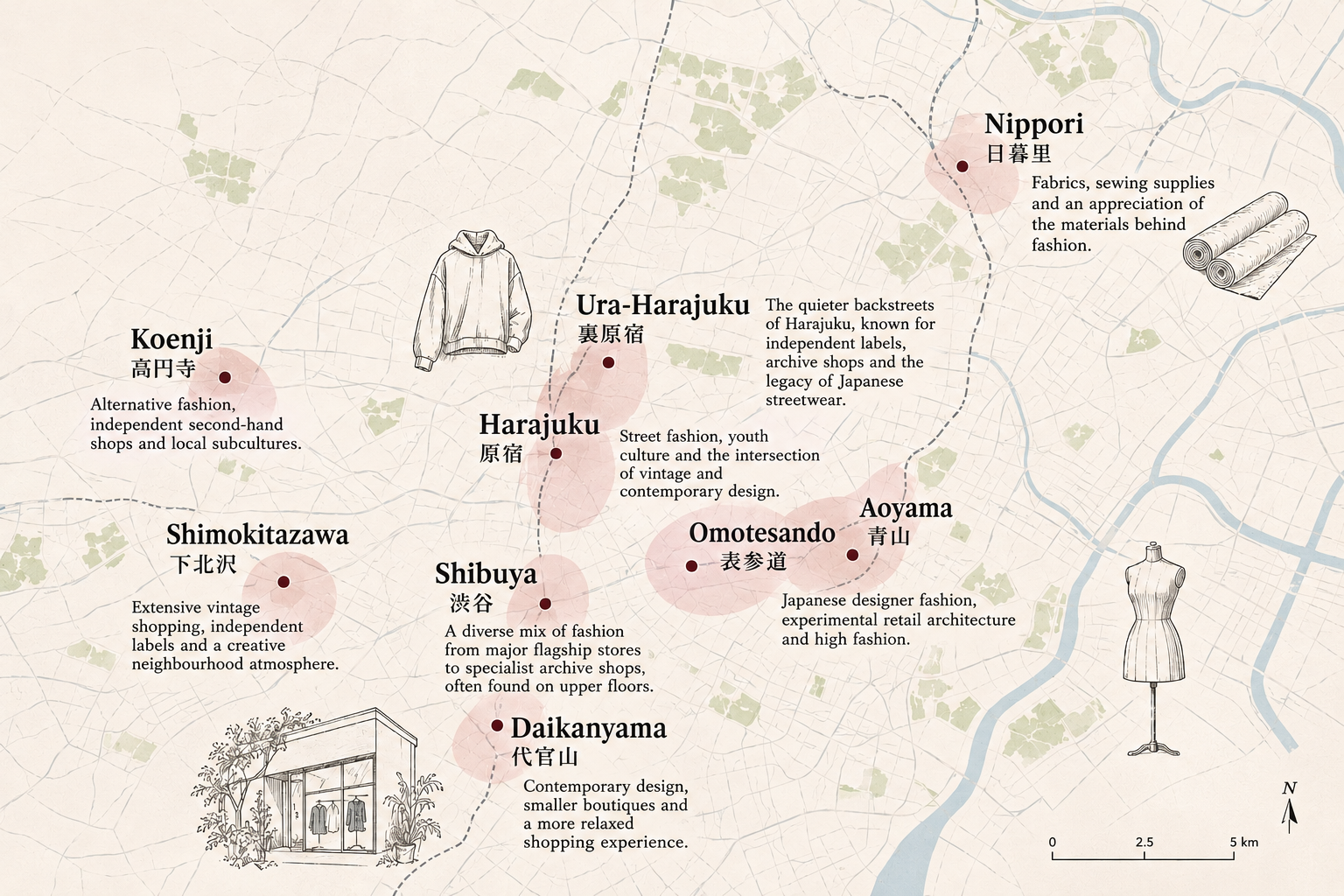
Exploring Tokyo Through Fashion
-
The quieter backstreets of Harajuku, collectively known as Urahara (裏原), played an important role in the development of Japanese streetwear during the 1990s. This is the cultural environment from which labels such as UNDERCOVER and A Bathing Ape emerged.
BerBerJin is an institution among vintage denim collectors, particularly for rare American Levi’s and workwear. It is also an interesting introduction to ametora (アメトラ), the Japanese interpretation of American traditional style. Japan's relationship with American clothing has developed into a highly specialised culture of collecting, reproduction and reinterpretation.
-
For a particularly interesting addition to Tokyo's fashion landscape in 2026, look for LAILA PARIS, a concept store that opened in September. Its selection focuses on archival Japanese fashion, including Comme des Garçons, Yohji Yamamoto, Issey Miyake, Kansai Yamamoto and Tokio Kumagai.
The space also incorporates postmodern furniture and a dedicated selection of fashion and art publications. It is closer to a curated cultural space than a conventional second-hand boutique.
What makes it particularly interesting is the opportunity to encounter Japanese fashion history through actual garments rather than photographs or museum displays.
-
Beyond Shibuya's enormous commercial buildings, some of its most interesting fashion shops occupy considerably less conspicuous spaces.
10TOW, located on the fourth floor of a building in Udagawacho, specialises in Japanese designer fashion. Look for archival pieces by Junya Watanabe, Yohji Yamamoto, UNDERCOVER and Comme des Garçons.
BLUE ROOM offers an entirely different perspective, specialising in streetwear from the 1990s and early 2000s. Its selection reflects an important period in the relationship between Japanese and American youth culture, with labels such as GOODENOUGH, Stüssy and BAPE.
Both shops demonstrate why previous collections can be considerably more interesting than whatever happens to be fashionable this season.
-
While Shimokitazawa has become an established destination on international vintage shopping itineraries, Koenji retains a stronger association with alternative music, independent businesses and local subcultures.
Explore the smaller streets around the PAL shopping arcade and Look Street rather than limiting yourself to the immediate station area.
KISSMET is particularly interesting for archival menswear, bringing together Japanese avant-garde designers and European labels such as Helmut Lang and Raf Simons.
SAFARI, with several shops in the neighbourhood, is worth exploring for specialist vintage clothing, denim and Americana.
Koenji is a place where having some knowledge of fashion history can genuinely change the shopping experience. Not everything is inexpensive, and the significance of a garment is not always immediately obvious.
-
Daikanyama offers a quieter and more considered approach to fashion shopping.
One particularly interesting address is LAILA TOKIO, which reopened in Daikanyama in February 2025 as an appointment-only boutique after closing its former Shibuya location.
Its archive encompasses designers such as Martin Margiela, Helmut Lang, Hussein Chalayan and members of the Antwerp Six. For anyone interested in the history of experimental fashion from the late twentieth century onwards, it is a particularly relevant destination.
Booking an appointment may seem unusually formal for second-hand shopping, but it reflects the position that archive fashion increasingly occupies between retail, collecting and cultural preservation.
-
Nippori Textile Town remains one of my personal recommendations, particularly for anyone interested in the materials behind fashion.
Beyond the well-known TOMATO fabric stores, it is worth exploring the smaller specialist businesses dealing in leather, sewing accessories and individual types of textiles.
You do not need to know how to sew to appreciate the differences between fabrics or begin to understand why certain garments cost considerably more than others.
-
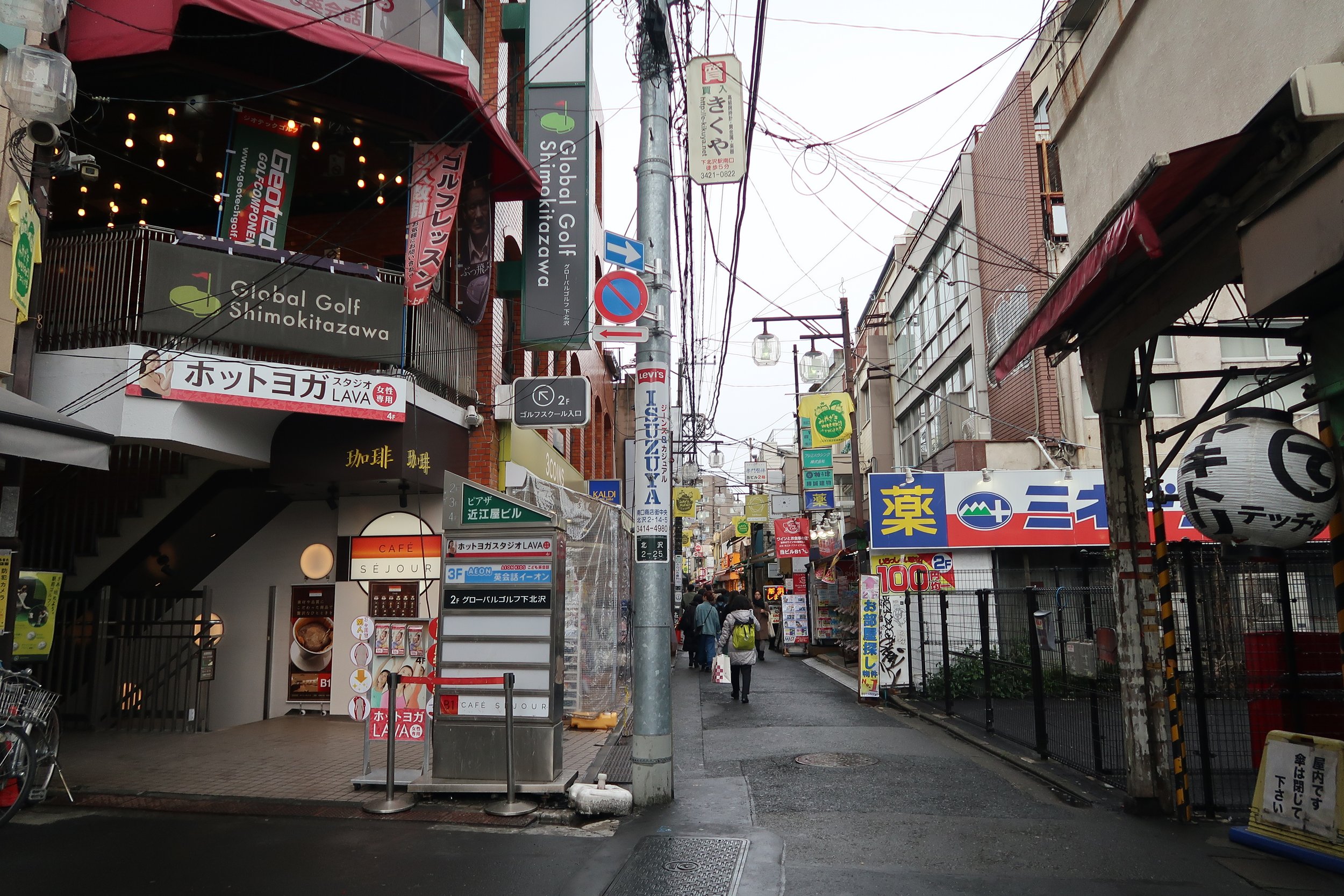
Shimokitazawa is hardly a hidden gem anymore, but it remains worth visiting. I would suggest exploring the neighbourhood beyond its busiest vintage shopping streets.
NEW YORK JOE EXCHANGE, housed in a former public bathhouse, operates through a buy, sell and exchange model. Its changing inventory makes it interesting for less predictable discoveries.
The redeveloped railway corridor around reload and BONUS TRACK also offers a broader perspective on Tokyo's independent creative culture, bringing together smaller businesses, design, publishing and food.
It is worth experiencing Shimokitazawa as a neighbourhood rather than simply as an enormous second-hand shop.
A Note on Shopping for Japanese Fashion
When searching for second-hand fashion in Japan, it is worth using Japanese search terms rather than relying exclusively on English-language recommendations.
古着屋 — second-hand clothing shop
デザイナーズ古着 — second-hand designer clothing
アーカイブ — archive fashion
生地屋 — fabric shop
セレクトショップ — independently curated fashion boutique
Many smaller shops communicate primarily through Instagram, where new arrivals, temporary opening hours and special events are announced. Some do not open until early afternoon.
Further Reading
Yuniya Kawamura – Fashioning Japanese Subcultures
Sharon Kinsella – Cuties in Japan (1995)
Erving Goffman – The Presentation of Self in Everyday Life
Pierre Bourdieu – Distinction: A Social Critique of the Judgement of Taste
Dick Hebdige – Subculture: The Meaning of Style
Georg Simmel – Fashion (1904)
Liza Dalby – Kimono: Fashioning Culture